
Tree Stand Safety: The Hunting Habit That Prevents the Most Serious Injuries
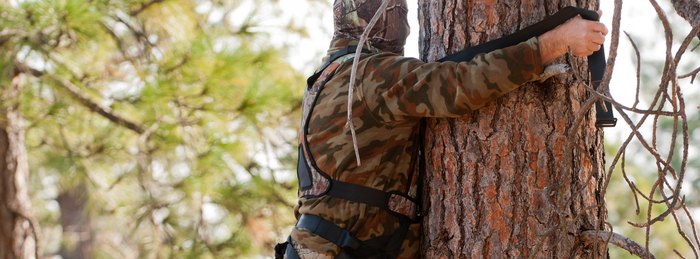
Tree stand safety is the single most important conversation to have before opening day. Season dates differ from state to state, but the preparation happens on roughly the same schedule everywhere. Stands go up, cameras go out, and hunters start climbing. Falls from elevated stands remain the leading cause of serious hunting injuries, well ahead of firearm incidents. Trauma surgeons have documented the pattern for decades. The injuries they see are severe: spinal fractures, spinal cord injuries, and head trauma.¹
In this guide, we cover what the research says about how falls happen and the harness habit that prevents most of them. We also walk through a pre-season inspection routine and what to do if someone falls in a remote spot. Finally, we explain how a PHI Cares Membership supports hunting households, with $0 out-of-pocket responsibility for medically necessary flights by PHI Air Medical or a cooperative partner.
What the Research Says About Tree Stand Falls
Spine surgeons at the Level 1 trauma center at the University of Wisconsin Hospital and Clinics reviewed their trauma database. They identified 117 patients evaluated after tree stand falls during Wisconsin deer seasons. Spine and spinal cord injuries were common. The authors concluded that falls from tree stands represent a persistent and preventable source of neurological injury.¹
A separate review at the University of Rochester Medical Center examined 54 tree stand fall patients. The average fall height was 18.2 feet, with a range of 4 to 40 feet. Spinal fractures were the most common injury, appearing in 54 percent of patients. Most occurred in the thoracolumbar region.²
Two findings from that research shape every recommendation that follows. First, most falls occur while climbing into or out of the stand rather than while sitting in it. Second, the most frequent causes are errors in stand placement leading to structural failure, plus errors during the climb.²
That second finding is oddly encouraging. It means the highest-risk moments are short, predictable, and entirely within the hunter’s control.
Tree Stand Safety Starts With the Harness Habit
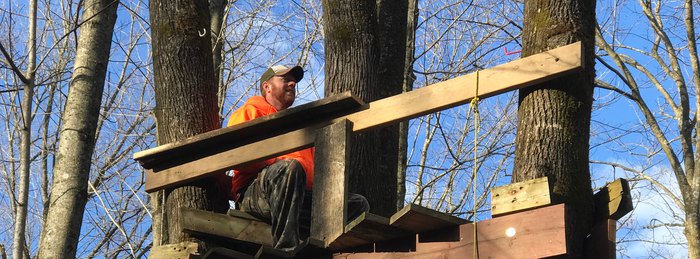
A full-body harness only works when it is connected to the tree. State wildlife agencies emphasize this repeatedly. The gap between owning a harness and being attached during the climb is where injuries happen. Wisconsin’s Department of Natural Resources notes that many deer hunters still do not use a safety harness every time they climb.³
Build every tree stand safety habit around one rule: stay connected from the moment your feet leave the ground until they return to it.
- Wear a full-body harness, not a single strap belt. Waist-only belts can cause serious injury in a fall.
- Install a lifeline — a rope with a prusik knot running the full height of the tree — so you can clip in at ground level and stay attached the entire climb.
- Use three points of contact on every step, and keep both hands free.
- Haul gear with a rope, never on your back or in your hands while climbing. Unload firearms and quiver arrows before hauling.
- Know your suspension relief plan. Carry a suspension relief strap and practice using it, because hanging motionless in a harness can cause serious circulatory problems within minutes.
The pre-season inspection nobody wants to do
Stands left in the woods deteriorate. Straps degrade in ultraviolet light, cables fray, welds crack, and the tree itself grows and shifts. Inspect every stand before the season, and replace rather than repair anything questionable.
Check the straps and cables for cuts, fraying, dry rot, and stiffness. Examine welds, bolts, pins, and platform decking. Confirm the tree is alive and healthy, with no dead limbs overhead. Replace ratchet straps annually as a rule of thumb. Read and follow the manufacturer’s instructions, including weight limits and installation angles.
Tree Stand Safety Rules for Opening Day
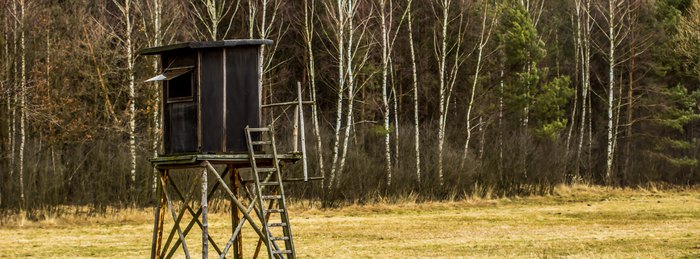
Beyond the harness, a handful of habits reduce risk for every hunter in the family.
- Tell someone your plan. Share your stand location, entry route, and expected return time. Mark the location on a shared map.
- Carry a charged phone and a backup. Keep the phone on your body, not in your pack hanging on a hook out of reach.
- Hunt with a partner when possible, and set check-in times.
- Never climb impaired or exhausted. Alcohol, prescription sedatives, and severe fatigue all affect balance and judgment.
- Skip the climb in bad conditions. Ice, rain, and high wind change the calculation entirely.
- Keep youth hunters in ground blinds until they are old enough and strong enough for elevated stands, and always supervise their setup.
Consider the ground blind
Ground blinds eliminate fall risk entirely. For older hunters, for anyone with balance or cardiac concerns, and for hunters working alone in remote country, a ground blind is a reasonable choice rather than a compromise.
Talk about it with the whole hunting party
Safety culture spreads through habit, not lectures. If the most experienced hunter in camp clips in at ground level every time, everyone else follows. If that person free-climbs, the youngest hunter in the group learns that too. Set the standard out loud on the first morning, then keep to it.
What to Do When Someone Falls in the Woods
Remote terrain complicates every step of the response. Plan for it before the season starts.
- Call 911 first. Tell the dispatcher where you are, then stay on the line and answer their questions. They will work out what they need.
- Do not move a fall patient with suspected spinal injury unless there is immediate danger. Spinal fractures were the most common finding in tree stand fall studies, and movement can worsen a cord injury.²
- Control bleeding and keep the patient warm. Cold ground pulls heat quickly, and hypothermia complicates trauma care.
- Send someone to meet responders at a road, gate, or trailhead if there is more than one person present.
Ground access to a stand site can take a long time. When 911 dispatchers determine that a patient needs a higher level of care quickly, they may request air medical transport. PHI Air Medical operates 68 membership bases from coast to coast, staffed by experienced pilots and trained medical personnel who deliver critical care during transport.⁴ Dispatchers and first responders coordinate that entire response, so hunters never have to think about it. Our post on the journey from a 911 call to hospital care explains the process, and our guide to trauma centers explains why spinal and head injury patients are flown to specific facilities.
How PHI Cares Membership Supports Hunting Households
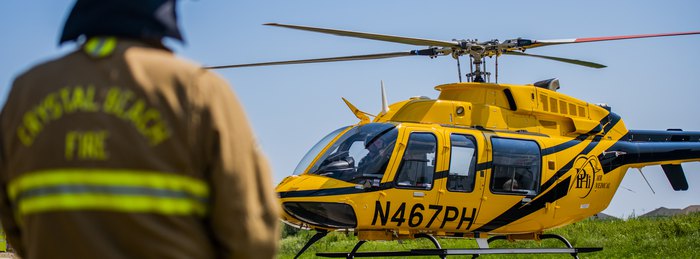
Emergency air transport may result in significant out-of-pocket responsibility depending on the situation and your insurance plan. Financial responsibility can vary, and hunting country is exactly where distance to a trauma center is greatest.
PHI Cares helps households prepare for unexpected emergency transport situations. Members have $0 out-of-pocket responsibility for medically necessary flights by PHI Air Medical or a cooperative partner. PHI Cares works with your insurance provider and accepts the insurance payment as payment-in-full, according to membership terms.
One household membership includes your spouse, dependents living at the same address, and up to 3 additional people at the same address. Coverage begins 5 days after enrollment, so handling it before opening weekend makes sense. Review options on our memberships page, and confirm your area is served using our coverage map. Our post on rural resilience explains how air medical bases support access to care in the counties where most hunting happens.
A Pre-Season Tree Stand Safety Checklist
Work through this tree stand safety list before the first sit of the year.
- Inspect every stand and replace worn straps. Follow manufacturer instructions and weight limits.
- Install lifelines on all fixed-position and ladder stands so you can clip in at ground level.
- Try on the harness over your actual hunting clothes, and adjust it. Practice the suspension relief strap at ground level.
- Test the haul line and confirm your firearm-unloading routine.
- Check your state’s rules and dates. Season openers, legal stand types, and harness requirements vary by state, so confirm with your state wildlife agency before you hunt.
- Share your hunt plan with someone at home, including stand locations and check-in times.
- Pack the emergency kit: phone, backup power, headlamp, whistle, tourniquet and pressure dressing, and a compact space blanket.
- Review medical and membership details so the household is set before the season.
Frequently Asked Questions About Tree Stand Safety
What is the leading cause of serious hunting injuries?
Falls from elevated stands, not firearm incidents, account for the majority of serious hunting injuries treated at trauma centers. Published trauma center reviews document spinal fractures, spinal cord injuries, and head trauma as the most common results.¹,²
When do most tree stand falls happen?
Most falls occur while climbing into or out of the stand rather than while seated. Errors in stand placement leading to structural failure, and errors during the climb, are the most frequently reported causes.²
What kind of harness should hunters use?
Use a full-body harness that meets the manufacturer’s standards, not a waist belt or chest strap alone. Pair it with a lifeline so you stay connected from the ground up, and carry a suspension relief strap in case you end up hanging.
How high are typical tree stand falls?
In a University of Rochester review of 54 patients, the average fall height was 18.2 feet, with a range of 4 to 40 feet.² Falls from that height regularly produce spinal and head injuries.
Does a PHI Cares Membership help after a hunting accident?
Yes. If a medically necessary emergency transport is performed by PHI Air Medical or a cooperative partner, members have $0 out-of-pocket responsibility according to membership terms. After a transport, members should contact the PHI Cares Membership Department so we can coordinate directly with the insurance provider.
Who can enroll in PHI Cares?
Most households in a PHI Cares service area can enroll, and one plan includes your spouse, dependents at your address, and up to 3 additional people at the same address. Federal law does not permit Medicaid participants to enroll in air medical membership programs. See the PHI Cares FAQ page for details and current eligibility information.
Tree stand safety comes down to one habit repeated on cold, dark mornings when nobody is watching. Clip in at the ground, stay connected all the way up, and tell someone where you are. That is most of the risk handled before the season even starts.
Membership in the PHI Cares Program is not an insurance product. PHI Cares does not cover and will not pay or reimburse you for services performed by any other air medical transport services provider or any ground ambulance services provider.
Sources
¹ Hamilton DK, et al. Spine and Spinal Cord Injuries After Falls From Tree Stands During the Wisconsin Deer Hunting Season. Wisconsin Medical Journal, University of Wisconsin Hospital and Clinics. pubmed.ncbi.nlm.nih.gov
² Crowley ST, et al. Tree stand falls: A persistent cause of neurological injury in hunting. World Journal of Clinical Cases, University of Rochester Medical Center. pmc.ncbi.nlm.nih.gov
³ Wisconsin Department of Natural Resources. DNR Urges Hunters To Use Treestand Harnesses This Fall. dnr.wisconsin.gov
⁴ PHI Air Medical. Official website. phiairmedical.com