
National Preparedness Month: Build a Household Emergency Plan That Works Where You Live

National Preparedness Month arrives every September, and it exists for a simple reason. Most households intend to get ready, and then life gets busy. The Federal Emergency Management Agency runs the observance through its Ready campaign, and the goal is to move families from good intentions to a written plan.¹ Preparedness is not complicated work. It is a handful of decisions made on a calm afternoon instead of a chaotic one.
In this guide, we walk through what a household emergency plan actually contains. We also cover why distance from care changes the math for rural families, and how to build the medical side of your plan. Finally, we explain where a PHI Cares Membership fits, because members have $0 out-of-pocket responsibility for medically necessary flights by PHI Air Medical or a cooperative partner, according to membership terms.
Why National Preparedness Month Lands in September
September is peak season for several hazards at once. Atlantic hurricane activity reaches its climatological high point around September 10. Meanwhile, western wildfire season runs hot, and severe thunderstorms still roll across the middle of the country. FEMA chose the month deliberately, and the observance has anchored the national conversation about readiness since 2004.¹
The gap between intention and action remains wide. FEMA’s National Household Survey found that roughly half of Americans believe they are prepared for a disaster. However, only about a third had practiced their plan in the past year.² Believing you are ready and having rehearsed a plan are two different things. National Preparedness Month is the annual nudge to close that gap.
Autumn also brings a quieter benefit. Schools are back in session, schedules settle, and families are together in the evenings. That makes September an easier month to gather everyone around the table for twenty minutes than almost any other.
What Belongs in a Household Emergency Plan

Ready.gov breaks planning into four questions, and answering them takes less than an hour.³ Sit down with everyone in the house and work through the list together.
- How will you receive alerts? Sign up for county emergency notifications, enable Wireless Emergency Alerts on every phone, and keep a battery or hand-crank weather radio in the house.
- Where will you shelter? Identify a safe room for severe weather and a second location outside your neighborhood in case you must leave.
- What is your evacuation route? Map two ways out of your area. Rural households should assume one route may be blocked by water, downed trees, or a closed bridge.
- How will you communicate? Choose one out-of-area contact everyone can call or text, because local lines often jam before long-distance ones do.
Write the answers down. A plan that lives only in one person’s head stops working the moment that person is unavailable.
Build the kit, then check it twice a year
A basic emergency supply kit covers three days of self-sufficiency at minimum: one gallon of water per person per day, non-perishable food, a manual can opener, flashlights, extra batteries, a first-aid kit, medications, sanitation supplies, and copies of key documents.⁴ Households far from town should plan for longer, because resupply takes longer.
Set a recurring reminder to rotate food, water, and batteries. National Preparedness Month works well as the annual checkpoint, and daylight saving time changes make a good second one.
The Medical Side of Preparedness Most Families Skip
Supplies get the attention. Medical information rarely does, and yet it is the part that emergency responders need first. This is the piece most household emergency plans leave out.
Build a one-page medical summary for every member of your household. Include full legal name, date of birth, current medications and doses, allergies, chronic conditions, recent surgeries, primary care provider, insurance details, and emergency contacts. Keep a printed copy in the go-bag, a copy on the refrigerator, and a photo on each adult’s phone.
If someone in your home has a complex condition, add a short line explaining what a first responder should know within the first sixty seconds. For a deeper walkthrough of this exercise, our post on getting your emergency information organized breaks it into a ten-minute task.
Practice your household emergency plan, do not just print it
Run a five-minute drill. Ask everyone where the meeting spot is, who the out-of-area contact is, and where the medical summary lives. Children remember drills far better than lectures, and adults discover gaps fast. FEMA’s survey data suggests practice is exactly where most households fall short.²
Distance Changes the Preparedness Math
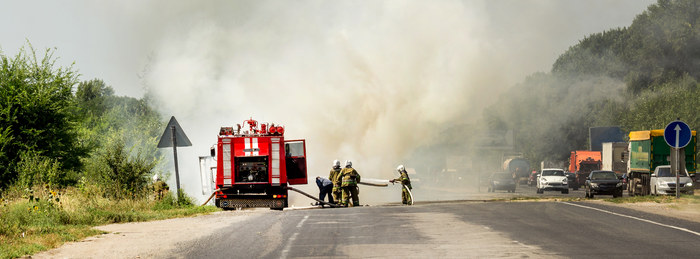
Rural households face a different set of constraints during a disaster. Roads flood or wash out. Cell coverage thins. The nearest hospital may be forty minutes away on a good day, and the nearest trauma center considerably farther. When a storm closes a route, ground transport times stretch further still.
That distance is why air medical transport belongs in rural preparedness planning. When 911 dispatchers determine that a patient needs a higher level of care quickly, they may request a helicopter. PHI Air Medical operates 68 membership bases from coast to coast. Crews include experienced pilots and trained medical personnel who deliver critical care during transport.⁵ Our post on rural resilience explores how those bases support small-town healthcare access.
Preparedness planning in a rural county should therefore answer one more question. If someone in this household needs advanced care fast, what happens, and what does that mean for us financially?
Two rural preparedness details worth sorting out
First, make sure everyone in the house can say the property address out loud under stress, including children old enough to call 911. Second, identify which neighbor has a tractor, a generator, or a four-wheel-drive truck, and agree in advance on who checks on whom.
Where a PHI Cares Membership Fits in Your Plan
Emergency air transport may result in significant out-of-pocket responsibility depending on the situation and your insurance plan. Financial responsibility can vary, and families rarely have time to sort it out in the moment. A membership program addresses that uncertainty ahead of time.
PHI Cares helps households prepare for unexpected emergency transport situations. Members have $0 out-of-pocket responsibility for medically necessary flights by PHI Air Medical or a cooperative partner. PHI Cares works with your insurance provider and accepts the insurance payment as payment-in-full, according to membership terms.
One household membership includes your spouse, dependents living at the same address, and up to 3 additional people at the same address. Coverage begins 5 days after enrollment, which is exactly why September is the right month to handle it. You can review options on our memberships page and confirm your area is served on our coverage map.
Add these three items to your National Preparedness Month checklist
- Write and print the household plan. Meeting spots, routes, out-of-area contact, alert sign-ups.
- Assemble or refresh the kit. Water, food, light, power, first aid, medications, documents.
- Handle the medical and membership pieces. One-page medical summaries for everyone, plus enrollment reviewed before you need it.
Preparedness for Specific Household Members
Every household has someone who needs a tailored plan. National Preparedness Month is a good moment to build those details in, rather than improvising later.
Older adults. Plan for mobility equipment, hearing and vision aids, and a two-week medication supply. Identify who checks on them within the first hour of a disruption.
Young children. Pack comfort items, formula or specialty foods, and a current photo in case you are separated. Teach them how to call 911 and what address to give.
People with disabilities. Document assistive technology, power requirements for medical devices, and service animal needs. Contact your utility about medical priority restoration lists.
Pets and livestock. Include carriers, food, water, vaccination records, and a plan for animals that cannot travel with you.
What to Do When the Emergency Is Medical

Preparedness is not only about weather. Most household emergencies are medical, and the response follows a predictable path.
Call 911 first and stay on the line. Give your address, then describe what happened and what you observe. Follow the dispatcher’s instructions, and let them decide the resources to send. Dispatch protocols determine whether ground EMS, air medical transport, or both respond.
From there, the response is entirely in the hands of professionals. Dispatchers, ground EMS, and the air medical communications center coordinate the whole thing, including whether an aircraft is needed and where it goes. Families never have to arrange any part of that. Our post on the journey from a 911 call to hospital care walks through how that coordination unfolds behind the scenes.
Your job is simpler. Call, describe, and follow instructions. Afterward, members should contact the PHI Cares Membership Department to let us know a member has been flown, so we can coordinate directly with the insurance provider.
Frequently Asked Questions About National Preparedness Month
When is National Preparedness Month?
National Preparedness Month runs the entire month of September every year. FEMA coordinates it through the Ready campaign, and state and local emergency management agencies host events, drills, and training throughout the month.¹
What are the four steps of emergency preparedness?
Ready.gov organizes preparedness around four actions: stay informed through alerts and warnings, make a plan, build a kit, and get involved in community preparedness efforts.³ Households that complete all four are meaningfully more ready than households that complete only one.
How much water and food should an emergency kit hold?
Plan for at least one gallon of water per person per day and a three-day supply of non-perishable food for evacuation, with a two-week supply at home if space allows.⁴ Rural households should lean toward the larger figure because resupply takes longer.
Does a PHI Cares Membership help during a disaster?
Yes. If a medically necessary emergency transport is performed by PHI Air Medical or a cooperative partner, members have $0 out-of-pocket responsibility according to membership terms. Membership does not determine which aircraft responds. Dispatch sends the closest first-available resource.
How soon does PHI Cares Membership take effect?
Coverage begins 5 days after enrollment, so enrolling during National Preparedness Month means your household is set before the next event. Enrollment details are on the memberships page.
Who can enroll in PHI Cares?
Most households in a PHI Cares service area can enroll, and one plan includes your spouse, dependents at your address, and up to 3 additional people at the same address. Federal law does not permit Medicaid participants to enroll in air medical membership programs. See the PHI Cares FAQ page for current eligibility information.
Pick one afternoon this September. Write the plan, refresh the kit, print the medical summaries, and review your membership. Preparedness brings peace of mind, and the work is far easier before you need it.
Membership in the PHI Cares Program is not an insurance product. PHI Cares does not cover and will not pay or reimburse you for services performed by any other air medical transport services provider or any ground ambulance services provider.
Sources
¹ Federal Emergency Management Agency, Ready Campaign. National Preparedness Month. ready.gov/september
² Federal Emergency Management Agency. Preparedness Research — National Household Survey. fema.gov
³ Federal Emergency Management Agency, Ready Campaign. Make a Plan. ready.gov/plan
⁴ Federal Emergency Management Agency, Ready Campaign. Build a Kit. ready.gov/kit
⁵ PHI Air Medical. Official website. phiairmedical.com