
Sepsis Warning Signs: What Every Household Should Know This Sepsis Awareness Month

Sepsis warning signs are easy to miss, and that is exactly what makes sepsis so dangerous. September is Sepsis Awareness Month, and September 13 is World Sepsis Day. This is the right moment to learn what to watch for. The Centers for Disease Control and Prevention describes sepsis as the body’s extreme response to an infection, and calls it a life-threatening medical emergency.¹ Almost any infection can trigger it, and it moves fast.
In this guide, we explain how sepsis develops and which sepsis warning signs deserve an immediate call to 911. We also cover who faces the highest risk and why time matters so much in treatment. Finally, we look at what happens when a rural patient needs a higher level of care quickly, and how a PHI Cares Membership helps households prepare with $0 out-of-pocket responsibility for medically necessary flights by PHI Air Medical or a cooperative partner.
What Sepsis Is and Why It Escalates So Quickly
Sepsis is not an infection itself. Rather, it is the body’s overwhelming reaction to one. An infection triggers a chain reaction throughout the body. Blood pressure can drop, organs can begin to fail, and tissue damage follows.¹ Without fast treatment, that cascade can become fatal.
The infections that most often lead to sepsis start in the lungs, urinary tract, skin, or gastrointestinal tract.¹ A urinary tract infection in an older adult is one common starting point. So is pneumonia after the flu, or an infected wound on a farm. Bacterial infections cause most cases, though viral and fungal infections can also lead to sepsis.
The scale is larger than most families realize. According to the CDC, about 1.7 million adults and more than 18,000 children in the United States develop sepsis each year.² At least 350,000 of those adults die during hospitalization or are discharged to hospice.² Globally, the Global Sepsis Alliance estimates 47 to 50 million cases annually.³
Sepsis does not usually start in the hospital
One detail surprises most families. Most cases of sepsis begin before a patient ever reaches the hospital.² In other words, sepsis usually starts at home, on the job, or in a long-term care setting. That is precisely why household recognition matters so much, and why an awareness month exists at all.
Sepsis Warning Signs That Call for 911

The CDC lists a specific set of signs and symptoms. A person with sepsis might have one or more of the following:¹
- Confusion or disorientation — new mental fog, slurred speech, or unusual sleepiness
- Extreme pain or discomfort — often described as “the worst I have ever felt”
- Fever, shivering, or feeling very cold
- Clammy or sweaty skin
- High heart rate or a weak pulse
- Shortness of breath
One symptom on its own may mean very little. Several together mean something serious, especially in someone with a known or suspected infection. Call 911 or go to an emergency department. Then say the word out loud: “I am concerned about sepsis.” That phrase prompts a specific set of clinical steps.
Signs that look different in children and older adults
Children may show fast breathing, unusual sleepiness, or difficulty waking. Watch also for cold hands and feet, or a rash that does not fade under pressure. Infants may feed poorly or become unusually floppy.
Older adults often present without a fever at all. Sudden confusion, a fall, weakness, or a general sense that something is wrong may be the only clue. Roughly a quarter to a third of sepsis patients had a healthcare visit in the week before hospitalization.² Therefore, families should trust their instincts when someone declines after a recent illness or procedure.
A simple household rule
Use this test when someone is sick. Are they getting better, staying the same, or getting worse? Illness that plateaus deserves a call to a clinician. Illness that clearly worsens, especially with confusion or breathing changes, deserves emergency care right away.
Who Faces the Highest Risk
Anyone can develop sepsis. Still, risk is not evenly distributed. The CDC notes that most people who develop sepsis have at least one existing medical condition.² Higher-risk groups include:
- Adults 65 and older
- Infants under one year
- People with weakened immune systems, including cancer patients currently in treatment
- People with chronic conditions such as diabetes, lung disease, or kidney disease
- People who have recently been hospitalized or had surgery
- Sepsis survivors, because a prior episode raises future risk
Farm and ranch households deserve a specific mention. Puncture wounds, animal-related injuries, and contaminated cuts create infection pathways that town dwellers encounter less often. Moreover, during harvest season an untreated wound can escalate quietly while the work continues.
Why Every Hour Matters in Sepsis Treatment
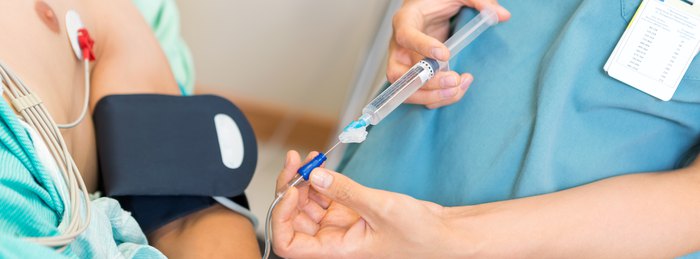
Research consistently shows that rapid, effective treatment improves outcomes. The CDC states that fast sepsis care means giving appropriate treatment as soon as possible, including antibiotics, while maintaining blood flow to the organs.¹ Sometimes surgery is required to remove damaged tissue.
That urgency creates a geography problem. A critical access hospital can start antibiotics and fluids quickly. However, a septic shock patient may need intensive care, advanced monitoring, dialysis, or surgical source control that a small facility cannot provide. At that point, the question becomes how fast the patient can reach a higher level of care.
When Sepsis Becomes an Air Medical Transport
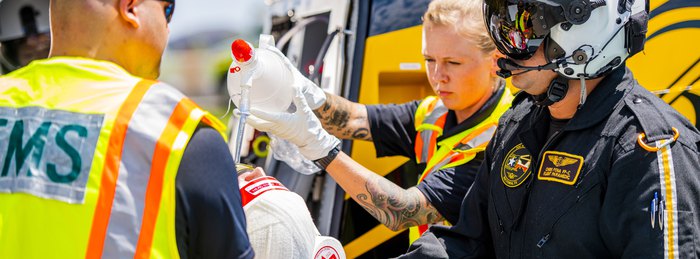
Interfacility transfer is one of the most common reasons air medical crews fly. A rural emergency department stabilizes a patient with suspected septic shock. The team recognizes that the patient needs an intensive care unit. Then they request transport to a receiving facility that may sit 60 to 150 air miles away.
PHI Air Medical crews pair a critical care flight nurse with a flight paramedic. An online medical control physician supports the crew with real-time orders.⁴ During a sepsis transport, the crew manages vasopressor infusions, ventilator settings, fluid resuscitation, and continuous monitoring. The team also radios clinical updates ahead, so the receiving specialists are ready on arrival. PHI Air Medical operates 68 membership bases from coast to coast.⁴
Our post on how air medical teams coordinate with ground EMS explains how that handoff works, and our guide to medevac flights walks through the process from dispatch to hospital arrival.

Preventing the Infections That Lead to Sepsis
Prevention is unglamorous and effective. The CDC recommends four habits that reduce sepsis risk:⁵
- Prevent infections. First, stay current on recommended vaccines, including influenza and pneumococcal vaccines. Then manage chronic conditions well.
- Practice good hygiene. Wash hands often. Also, clean and cover wounds until they heal.
- Know the signs. Learn the sepsis warning signs listed above, and share them with everyone in the household.
- Act fast. Seek care immediately if an infection is not improving, or if it is clearly getting worse.
Rural households should add one more habit. Treat every puncture wound, animal bite, and deep scrape as a real injury. Clean it, cover it, and then watch for spreading redness, streaking, swelling, or fever.
Recovery does not end at discharge
Many sepsis survivors experience lasting effects, including fatigue, muscle weakness, difficulty concentrating, and higher risk of future infection. The CDC now publishes guidance specifically on managing recovery from sepsis.¹ Families should plan for a recovery period rather than expecting an immediate return to normal.
How PHI Cares Membership Supports Your Household
Emergency air transport may result in significant out-of-pocket responsibility depending on the situation and your insurance plan. Financial responsibility can vary. A membership program lets families handle that question in advance rather than during a hospitalization.
PHI Cares helps households prepare for unexpected emergency transport situations. Members have $0 out-of-pocket responsibility for medically necessary flights by PHI Air Medical or a cooperative partner. PHI Cares works with your insurance provider and accepts the insurance payment as payment-in-full, according to membership terms.
One household membership includes your spouse, dependents living at the same address, and up to 3 additional people at the same address. Coverage begins 5 days after enrollment. Review options on our memberships page, and confirm your area is served using our coverage map.
Frequently Asked Questions About Sepsis Warning Signs
What are the first sepsis warning signs to watch for?
The CDC lists confusion or disorientation, extreme pain or discomfort, fever or shivering, clammy or sweaty skin, high heart rate or weak pulse, and shortness of breath.¹ Any combination of these in someone with a known or suspected infection warrants immediate medical attention.
Is sepsis contagious?
No. Sepsis itself does not spread from person to person. However, the infections that lead to sepsis can be contagious, which is why hand hygiene and vaccination matter for the whole household.
When is Sepsis Awareness Month and World Sepsis Day?
Sepsis Awareness Month is observed every September, and World Sepsis Day falls on September 13 each year. The Global Sepsis Alliance launched World Sepsis Day in 2012 to raise recognition of sepsis worldwide.³
Why would a sepsis patient need an air ambulance?
Septic shock often requires intensive care, advanced monitoring, and sometimes surgical treatment that smaller hospitals cannot provide. When a sending physician determines that a patient needs a higher level of care quickly, air medical transport can shorten the time to that care. Dispatch and clinical protocols determine the right resource.
Does a PHI Cares Membership help with a sepsis transport?
Yes. If a medically necessary emergency transport is performed by PHI Air Medical or a cooperative partner, members have $0 out-of-pocket responsibility according to membership terms. After a transport, members should contact the PHI Cares Membership Department so we can coordinate directly with the insurance provider.
Who can enroll in PHI Cares?
Most households in a PHI Cares service area can enroll, and one plan includes your spouse, dependents at your address, and up to 3 additional people at the same address. Federal law does not permit Medicaid participants to enroll in air medical membership programs. See the PHI Cares FAQ page for details and current eligibility information.
Learn the sepsis warning signs, share them at the dinner table this month, and treat infections seriously. Awareness costs nothing, and during Sepsis Awareness Month it may be the most valuable thing your household adds to its emergency plan.
Membership in the PHI Cares Program is not an insurance product. PHI Cares does not cover and will not pay or reimburse you for services performed by any other air medical transport services provider or any ground ambulance services provider.
Sources
¹ Centers for Disease Control and Prevention. About Sepsis. cdc.gov
² Centers for Disease Control and Prevention. Sepsis Burden. cdc.gov
³ Global Sepsis Alliance. World Sepsis Day — September 13. worldsepsisday.org
⁴ PHI Air Medical. Official website. phiairmedical.com
⁵ Centers for Disease Control and Prevention. Preventing Infections That Can Lead to Sepsis. cdc.gov