
Harvest Season Farm Safety: Protecting the People Behind the Crop
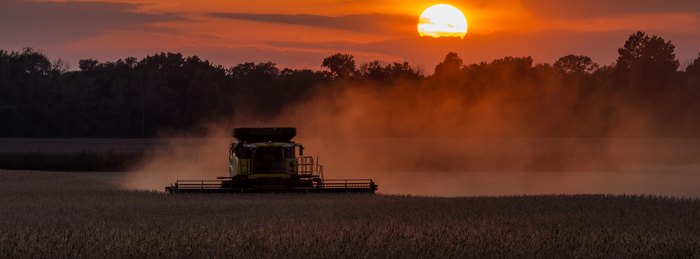
Harvest season farm safety deserves real attention every September. The busiest weeks of the year are also among the most dangerous. National Farm Safety and Health Week runs September 21–25, 2026, under the theme “Safety Today, Success Tomorrow.”¹ The National Education Center for Agricultural Safety leads the observance as the agricultural partner of the National Safety Council. Every sitting U.S. president has proclaimed the week since Franklin D. Roosevelt in 1944.¹
In this guide, we cover the hazards that send farmers and ranchers to trauma centers, and the practical habits that prevent them. We also explain what happens when an injury on remote ground requires emergency air medical transport. Finally, we show how a PHI Cares Membership supports farm households, with $0 out-of-pocket responsibility for medically necessary flights by PHI Air Medical or a cooperative partner.
Why Agriculture Remains the Most Dangerous Industry
The numbers are stark. The U.S. Bureau of Labor Statistics recorded 476 fatal work injuries in agriculture, forestry, fishing, and hunting in 2024.² The sector consistently posts the highest fatal work injury rate of any industry in the country. NIOSH puts the agricultural rate at 18.6 deaths per 100,000 full-time equivalent workers.³
Fall harvest concentrates that risk. Long days, tight weather windows, tired operators, and equipment running near capacity combine in a way few other seasons match. Two factors raise the stakes on farms specifically. Family members of every age work alongside employees. And the nearest hospital is often a long drive away.
Daily focus areas for National Farm Safety and Health Week 2026
NECAS organizes the week around five daily themes, and they map neatly onto a farm’s own safety review:¹
- Monday: Equipment and rural roadway safety
- Tuesday: Health and wellness
- Wednesday: Generations of farming
- Thursday: Confined spaces
- Friday: Cancer prevention
Harvest Season Farm Safety Around Equipment
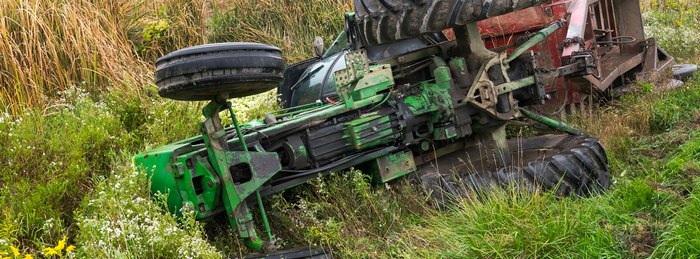
Tractors remain the single largest source of farm fatalities, and overturns are the leading cause of death among them.³ The National Institute for Occupational Safety and Health identifies one intervention as the most effective by a wide margin. That intervention is a rollover protective structure used together with a seat belt.³
Build these harvest season farm safety habits into every working day:
- Use ROPS and buckle up. A rollover protective structure works only when the operator stays inside the protected zone.
- Shut it down before you clear it. Turn off the engine and remove the key. Then wait for every moving part to stop before unplugging a header or auger.
- Guard the power take-off (PTO). Keep master shields and driveline guards in place. Meanwhile, keep loose clothing, drawstrings, and long hair well away.
- Watch slopes and ditches. Most overturns happen on inclines or near embankments. They also happen when a rear wheel drops into a ditch.
- No extra riders. One seat means one person, unless the machine has an instructor seat designed for a passenger.
Harvest season farm safety on public roads
Equipment moves between fields on public roads all season. Use slow-moving vehicle emblems, working lights and flashers, and escort vehicles on busy stretches. Plan routes that avoid the worst traffic hours where possible, and give motorists room to pass safely. Our post on roadway safety covers driver-side habits that reduce collisions.
Grain Bins and Confined Spaces
Grain entrapment is fast and unforgiving. Flowing grain can pull a worker under in seconds. Furthermore, the sheer weight of grain makes self-rescue nearly impossible once a person is buried to the waist.
Follow these rules without exception:
- Never enter a bin with grain flowing. Lock out and tag out all unloading equipment first.
- Use a body harness and lifeline anchored outside the bin, with an observer present.
- Test the air. Oxygen levels can drop and toxic gases can build in bins, silos, and manure pits.
- Break up crusted grain from outside using a pole, never by walking on the bridge.
- Train the whole crew on entry procedures and rescue limitations. NECAS publishes free grain bin safety resources and videos.¹
Confined space emergencies frequently require a technical rescue team in addition to EMS. Extrication can take hours. That timeline is one reason farm households should think through the medical response chain long before an incident.
Grain bin safety is a whole-crew conversation
Post the entry rules on the bin itself, not in a binder in the shop. Then talk through them with everyone at the start of the season, including seasonal help and family members who only work weekends. NECAS publishes short grain bin safety videos that work well for a fifteen-minute crew meeting.¹
ATVs, UTVs, Livestock, and Falls
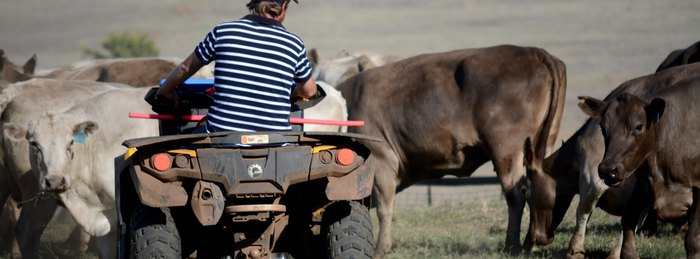
Harvest season farm safety extends well beyond the combine. Utility vehicles roll on uneven ground. Livestock handling produces crush injuries, kicks, and head trauma. Meanwhile, falls from ladders, bins, and truck beds account for a steady share of trauma admissions.
Practical steps help across all three:
- Wear helmets on ATVs, and use seat belts in UTVs with rollover protection.
- Keep youth operators on machines sized and rated for them.
- Design livestock handling facilities with escape routes. Also, never work alone in a confined pen with a bull or a fresh cow.
- Use three points of contact on every ladder and machine. Meanwhile, keep steps clear of mud and chaff.
Health and wellness is a safety issue
Fatigue impairs judgment and reaction time the same way alcohol does. Long harvest days, skipped meals, and short nights raise the risk of every hazard on this page. Therefore, build in rotation, food, hydration, and sleep.
Protective equipment belongs in the same conversation. Use hearing protection, respiratory protection in dusty conditions, and sun protection every day. NECAS now dedicates a full day of the week to cancer prevention for exactly this reason.¹
When a Farm Injury Requires Air Medical Transport
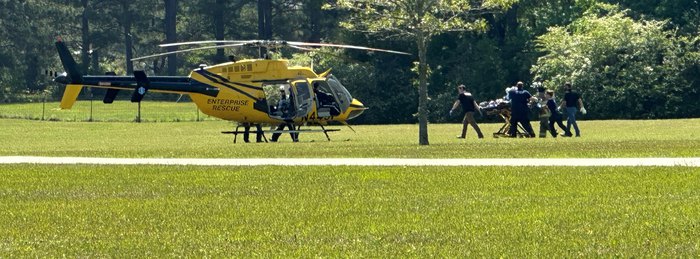
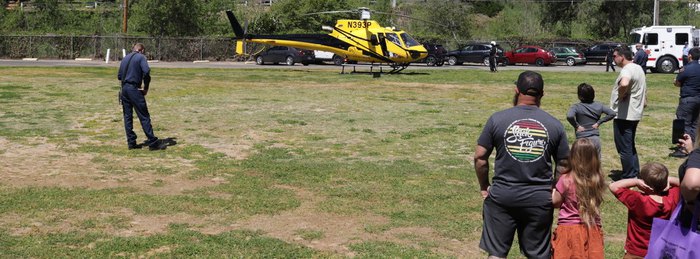
Farm ground is often the definition of remote. A crush injury, an amputation, a severe head injury, or an entrapment can happen miles from pavement. By ground, the nearest trauma center may be an hour or more away. When 911 dispatchers determine that a patient needs a higher level of care quickly, they may request a helicopter.
PHI Air Medical operates 68 membership bases from coast to coast. Crews include experienced pilots and trained medical personnel who deliver critical care during transport.⁴ Every part of that response is coordinated by dispatchers and first responders, not by the family on scene. Our post on the journey from a 911 call to hospital care walks through how that works. Similarly, our guide to trauma centers explains why patients are flown to specific facilities.
What you can do is help responders reach you quickly. Post your address at the driveway and keep it visible from the road, day and night. Then answer the dispatcher’s questions as clearly as you can. Seconds spent locating a scene are seconds not spent on patient care.
How PHI Cares Membership Fits Harvest Season Farm Safety
Emergency air transport may result in significant out-of-pocket responsibility depending on the situation and your insurance plan. Financial responsibility can vary. That uncertainty is exactly what a membership program addresses ahead of time.
PHI Cares helps households prepare for unexpected emergency transport situations. Members have $0 out-of-pocket responsibility for medically necessary flights by PHI Air Medical or a cooperative partner. PHI Cares works with your insurance provider and accepts the insurance payment as payment-in-full, according to membership terms.
One household membership includes your spouse, dependents living at the same address, and up to 3 additional people at the same address. Coverage begins 5 days after enrollment, so enrolling before harvest rather than during it makes sense. Review options on our memberships page and confirm your area is served using our coverage map. Our post on rural resilience explains how air medical bases strengthen small-town healthcare access.
A Practical Harvest Season Farm Safety Checklist
Use National Farm Safety and Health Week as your annual audit. Work through this list with everyone who sets foot on the operation.
- Walk the equipment. Check shields, guards, lights, slow-moving vehicle (SMV) emblems, brakes, and ROPS.
- Review confined space rules. Post them at the bin, and confirm harnesses and lifelines are in working order.
- Refresh first aid. Stock a real trauma kit with tourniquets and pressure dressings, and make sure someone knows how to use them.
- Verify communication. Identify dead zones, carry a charged phone or radio, and tell someone your work plan each day.
- Post the address. Make the driveway number visible from the road, day and night.
- Review the medical and membership pieces. One-page medical summaries for each household member, plus enrollment confirmed before harvest.
Frequently Asked Questions About Harvest Season Farm Safety
When is National Farm Safety and Health Week 2026?
National Farm Safety and Health Week runs September 21–25, 2026, with the theme “Safety Today, Success Tomorrow.” NECAS coordinates the week and hosts free daily webinars. Topics include equipment and rural roadway safety, health and wellness, generations of farming, confined spaces, and cancer prevention.¹
What is the leading cause of death on farms?
Tractor overturns are the leading cause of fatal farm injuries, and NIOSH identifies a rollover protective structure used with a seat belt as the most effective prevention.³ Agriculture as a sector carries the highest fatal work injury rate of any U.S. industry.²
How fast can grain entrapment happen?
Flowing grain can pull a worker under in seconds. Rescue becomes extremely difficult once a person is buried above the waist. Therefore, never enter a bin while unloading equipment is running. Always lock out power first, and use a harness and lifeline with an observer stationed outside the bin.¹
Why would a farm injury require a helicopter?
Farm work happens far from hospitals, and severe trauma benefits from rapid access to a trauma center. When 911 dispatchers determine air medical transport is appropriate, they handle the request and coordinate the response with first responders on scene. Dispatch always sends the closest first-available resource. Families do not arrange any part of it.
Does a PHI Cares Membership help after a farm accident?
Yes. If a medically necessary emergency transport is performed by PHI Air Medical or a cooperative partner, members have $0 out-of-pocket responsibility according to membership terms. After a transport, members should contact the PHI Cares Membership Department so we can coordinate directly with the insurance provider.
Who can enroll in PHI Cares?
Most households in a PHI Cares service area can enroll, and one plan includes your spouse, dependents at your address, and up to 3 additional people at the same address. Federal law does not permit Medicaid participants to enroll in air medical membership programs. See the PHI Cares FAQ page for details and current eligibility information.
The crop will still be there in ten minutes. Take the ten minutes. Harvest season farm safety comes down to a handful of habits repeated on the long days, when they are hardest to keep and matter most.
Membership in the PHI Cares Program is not an insurance product. PHI Cares does not cover and will not pay or reimburse you for services performed by any other air medical transport services provider or any ground ambulance services provider.
Sources
¹ National Education Center for Agricultural Safety. National Farm Safety and Health Week 2026. necasag.org
² U.S. Bureau of Labor Statistics. Agriculture, Forestry, Fishing and Hunting: NAICS 11. bls.gov
³ Centers for Disease Control and Prevention, NIOSH. Agriculture Worker Safety and Health. cdc.gov
⁴ PHI Air Medical. Official website. phiairmedical.com