
Back to School Safety: Bus Stops, New Drivers, and Smarter Routines
Back to School Safety: Bus Stops, New Drivers, and Smarter Routines
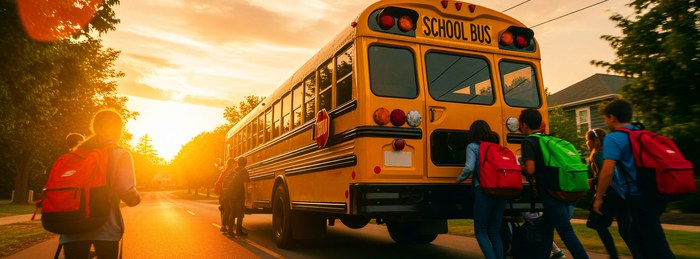
Back to school safety belongs on every family’s August to-do list, right next to the supply run and the new sneakers. As classrooms reopen, millions of children return to bus stops, crosswalks, bike lanes, and carpool lines, and neighborhood traffic patterns change overnight. Drivers who cruised through quiet streets all summer suddenly share the road with buses, young pedestrians, and newly licensed teens. A little preparation now sets safer habits for the entire school year.
This guide gathers back to school safety guidance from the National Highway Traffic Safety Administration and the Centers for Disease Control and Prevention, covering the school bus, the walk or bike to school, and the teen driver in your household. We also explain how emergency response works when a serious crash happens, and how a PHI Cares Membership helps your household prepare for the unexpected with $0 out-of-pocket responsibility for medically necessary flights by PHI Air Medical or a cooperative partner.
The School Bus: The Safest Ride to School
Here is encouraging news for parents: school buses are the most regulated vehicles on the road, and they are designed to be safer than passenger vehicles in preventing crashes and injuries.1 Their size, high visibility, flashing lights, and protective seating design all work together to shield young riders. In every state, stop-arm laws exist to protect children from other motorists.1
The most dangerous moments happen outside the bus, when children board and exit. That means drivers near a school bus carry real responsibility. NHTSA’s rules of the road are simple:1
- Yellow flashing lights mean the bus is preparing to stop. Slow down and prepare to stop your vehicle.
- Red flashing lights and an extended stop arm mean children are getting on or off. You must stop and wait until the red lights stop flashing, the stop arm is withdrawn, and the bus begins moving.
- Even when lights are not flashing, watch for children around school arrival and dismissal times, and stay alert when backing out of driveways or passing bus stops.
Back to school safety habits at the bus stop
Talk through bus stop routines with your kids before the first morning bell. NHTSA recommends that children:1
- Arrive at the stop about five minutes early, so nobody runs across a street to catch the bus
- Wait several giant steps back from the curb until the bus stops completely and the driver signals to board
- Exit after the bus stops, then look left-right-left before crossing any street
- Cross in front of the bus where the driver can see them, never behind it
Walking and Biking to School Safely
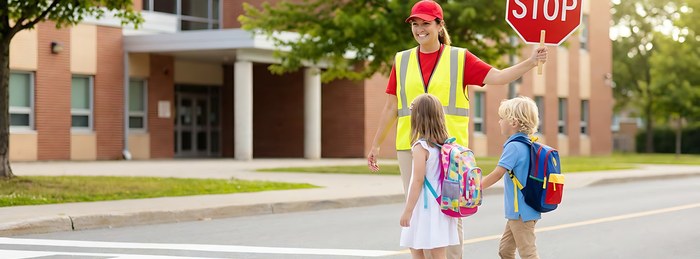
Students who walk or bike gain exercise and independence, and a few habits make those trips safer.1 Walkers should use sidewalks where available, cross at corners or marked crosswalks, and put phones away while crossing. Younger children benefit from walking with an adult or older buddy until the route becomes second nature. Bike riders should wear a properly fitted helmet on every ride, follow the same traffic rules as vehicles, ride with traffic, and use lights and bright clothing during dim morning hours. Practice the route together at least once before the first day so surprises show up during the rehearsal, not the real thing.
Teen Drivers: The Highest-Stakes Part of Back to School Safety
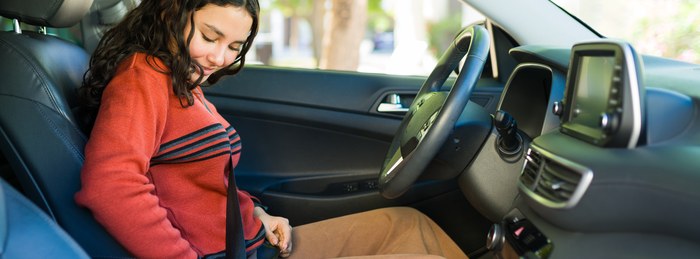
For families with a newly licensed driver, the drive to campus deserves the most attention of all. CDC research shows that crash risk is particularly high during the first months of licensure, and the crash rate per mile driven is about 1.5 times as high for 16-year-old drivers as for drivers ages 18 to 19.2 Several factors raise that risk, and parents can address each one directly:2
- Teen passengers. The presence of teen passengers increases the crash risk of unsupervised teen drivers, and the risk grows with each additional passenger. Limit passengers during the first year.
- Nighttime driving. The fatal crash rate at night for teen drivers runs about three times that of adult drivers per mile driven. Keep early-year driving in daylight when possible.
- Distraction. Phones stay out of reach while the car is moving. Model this behavior yourself.
- Seat belts. Make buckling up a non-negotiable condition of using the car, for the driver and every passenger.
Every state uses a graduated driver licensing (GDL) system that phases in privileges such as night driving and passengers as new drivers gain experience, and these systems are proven to reduce teen crashes and deaths.3 Learn your state’s GDL rules and enforce them at home. Many families also put expectations in writing with a parent-teen driving agreement, which gives everyone a clear, calm reference point before the keys change hands.
Keep practicing after the license arrives
Driving is a complex skill that must be practiced to be done well, and teens crash more often both because they lack experience and because they take more risks than seasoned drivers.3 The learner’s permit should not be the end of supervised practice. Ride along regularly during the first year and add progressively harder conditions together: rain, unfamiliar routes, rural two-lane roads, and eventually limited night driving as your state’s rules allow. Each supervised mile builds the hazard-recognition skills that new drivers have not yet developed on their own, since teens are more likely than older drivers to underestimate dangerous situations or fail to recognize them at all.2
Backpacks, Sleep, and the Morning Routine
Back to school safety extends beyond the road. A few household routines make the whole season smoother. Fit backpacks with both straps over the shoulders and keep the load reasonable so kids are not straining or off-balance at the curb. Move bedtimes back gradually in the week before school starts, because a well-rested student pays better attention at the bus stop, in the crosswalk, and behind the wheel. Lay out clothes, shoes, and packed bags the night before so mornings never turn into a sprint, and rushed families make rushed decisions in traffic. Finally, make sure every child knows a parent’s phone number, the family meeting plan, and how to reach a trusted adult if plans change after school.
Slow Down: School Zones and Carpool Lines
School zone speed limits exist because children are small, quick, and unpredictable, and because lower speeds give drivers more time to react. Build a few extra minutes into your morning so the drop-off line never feels like a race. Follow your school’s posted drop-off pattern, let children exit on the curb side only, and never double-park or wave children across traffic. Those small courtesies keep the whole line moving and protect every family in it.
When a Serious Crash Happens: How Emergency Response Works
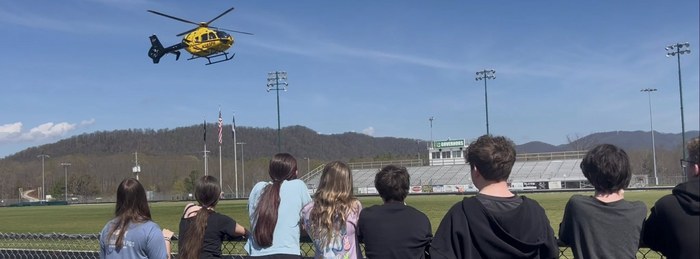
Even careful families cannot control every driver on the road. When a severe crash occurs, 911 dispatchers evaluate the situation and send the right resources. For critical injuries, especially in rural areas far from advanced care, that response can include emergency air medical transport to a trauma center, a hospital specially equipped and staffed to treat serious or life-threatening injuries. Our guide to trauma centers explains why patients with severe injuries benefit from reaching these specialized hospitals quickly, and our post on brain injury awareness covers why rapid access to advanced care matters after a head injury.
PHI Air Medical has 68 membership bases from coast to coast, and its crews include experienced pilots and trained medical personnel who care for critically ill and injured patients during transport.4 Emergency air transport may result in significant out-of-pocket responsibility depending on the situation and your insurance plan, which is where membership comes in.
How PHI Cares Membership Fits Your Family’s Plan
PHI Cares helps households prepare for unexpected emergency transport situations. Members pay $0 out of pocket for medically necessary flights by PHI Air Medical or a cooperative partner: PHI Cares works with your insurance provider and accepts the insurance payment as payment-in-full, according to membership terms. One household membership includes your spouse, dependents living at the same address, and up to 3 additional people at the same address, so the student driver, the bus rider, and the bike commuter in your household are all part of the same plan.
Coverage begins 5 days after enrollment. Review options on our memberships page and confirm your area on our coverage map before the school-year routine takes over your calendar.
Frequently Asked Questions About Back to School Safety
What should drivers do when a school bus flashes its lights?
Yellow flashing lights mean slow down and prepare to stop. Red flashing lights with the stop arm extended mean stop and stay stopped until the lights turn off, the arm retracts, and the bus moves.1 Stop-arm laws apply in every state.
What is the safest way for my child to get to school?
The school bus is an excellent choice: buses are the most regulated vehicles on the road and are designed to be safer than passenger vehicles in preventing crashes and injuries.1 Whatever the mode, rehearse the route, review the habits in this post, and keep morning schedules relaxed enough that nobody rushes.
How can I lower the risk for my teen driver?
Follow your state’s graduated driver licensing rules, limit teen passengers, restrict night driving during the first year, ban phone use behind the wheel, and require seat belts on every trip.23 A written parent-teen driving agreement helps keep expectations clear.
Why do bus stop rules matter so much if buses are already safe?
Because the risk sits outside the bus, not inside it. Children boarding and exiting depend on every nearby driver honoring the flashing lights and stop arm, and buses are still illegally passed at an alarmingly high rate nationwide.5 Teaching kids to wait well back from the curb, board only on the driver’s signal, and cross in front where the driver can see them adds a second layer of protection that does not depend on strangers driving perfectly.
Does PHI Cares Membership include my kids and our student driver?
Yes. A household membership includes your spouse, dependents living at the same address, and up to 3 additional people at the same address, according to membership terms. If a member is ever flown, call 911 first in any emergency; after the transport, contact the PHI Cares Membership Department to let us know a member has been flown. Enrollment details are on the memberships page.
A safe school year starts with the habits you set this month. Review the routes, talk through the rules, and give your household the added peace of mind of a PHI Cares Membership before the first bell rings.
Membership in the PHI Cares Program is not an insurance product. PHI Cares does not cover and will not pay or reimburse you for services performed by any other air medical transport services provider or any ground ambulance services provider.
Sources
1 National Highway Traffic Safety Administration. School Bus Safety. https://www.nhtsa.gov/road-safety/school-bus-safety
2 Centers for Disease Control and Prevention. Risk Factors for Teen Drivers. https://www.cdc.gov/teen-drivers/risk-factors/index.html
3 Centers for Disease Control and Prevention. Reducing Risk for Teen Drivers. https://www.cdc.gov/teen-drivers/prevention/index.html
4 PHI Air Medical. Official website. https://phiairmedical.com/
5 National Highway Traffic Safety Administration. Reducing the Illegal Passing of School Buses. https://www.nhtsa.gov/school-bus-safety/reducing-illegal-passing-school-buses