
Thanksgiving Kitchen Safety: How to Prevent Cooking Fires, Turkey Fryer Accidents and Burns
Thanksgiving fills the house with family, food and a busy kitchen. It is also the peak day of the year for home cooking fires.¹ At PHI Cares, we want every family to enjoy the holiday safely, so here is what fire safety, food safety and first aid experts recommend. Traveling? See our holiday travel readiness tips.

Why is Thanksgiving the peak day for home cooking fires?
According to the National Fire Protection Association (NFPA), Thanksgiving is the peak day for home cooking fires, with more than three times the daily average for such incidents.¹
NFPA estimates that 1,139 home cooking fires were reported to U.S. fire departments on Thanksgiving Day in 2024, reflecting 321 percent of the daily average.¹
NFPA also reports that unattended cooking was by far the leading contributing factor in cooking fires and fire deaths.¹
Stay in the kitchen while you are frying, grilling, boiling or broiling food. If you are simmering, baking or roasting, check the food regularly and use a timer to remind you that you are cooking.²
The U.S. Fire Administration (USFA) puts it simply: stand by your pan. If you leave the kitchen, turn the burner off.³
How do you prevent and put out a stovetop fire?
Keep anything that can catch fire, such as oven mitts, wooden utensils, food packaging and towels, away from your stovetop.² Turn pot handles toward the back of the stove so that no one can bump them or pull them over.³
Always cook with a lid beside your pan. If a small grease fire starts, NFPA says to slide the lid over the pan and turn off the burner. Do not remove the cover, because the fire could start again, and let the pan cool for a long time.²
Never throw water on a grease fire.²
For an oven fire, turn off the heat and keep the door closed.²
If the fire does not go out, or you do not feel comfortable sliding a lid over the pan, get everyone out of your home and call 911 from outside.²
For more tips, see our guide to preventing home fires.
Are turkey fryers safe to use?
NFPA says turkey fryers that use cooking oil are not safe. These fryers use large amounts of oil at high temperatures, which can cause devastating burns. If you want a fried turkey, NFPA suggests buying one from a grocery store or restaurant, or buying a fryer that does not use oil.¹
If you do fry a turkey, the U.S. Consumer Product Safety Commission (CPSC) says to fry it only outside and away from your home or other flammable materials. Never use a turkey fryer in an enclosed area like the garage or on the porch.⁴
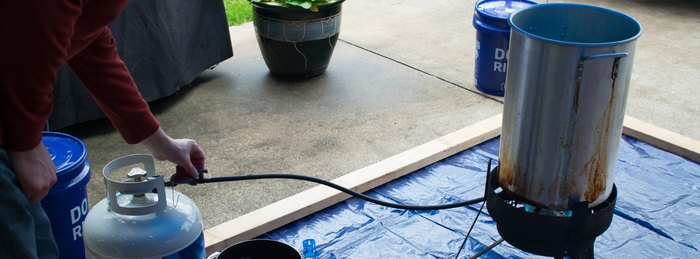
The USFA adds these precautions:
- Keep the fryer at least 10 feet from your home and not under roof eaves.⁵
- Set it on a sturdy, level surface and do not move it once it is in use.⁵
- Do not overfill the pot. Test the amount of oil you need by placing the turkey in the pot with water first.⁵
- Make sure the turkey is fully thawed, without frost on it. A partially frozen turkey will cause oil to splatter.⁵
- Use protective oven mitts, and keep children and pets at least 3 feet from the fryer.⁵
The USFA also suggests considering an electric or air fryer.⁵
How should you thaw and cook a turkey safely?
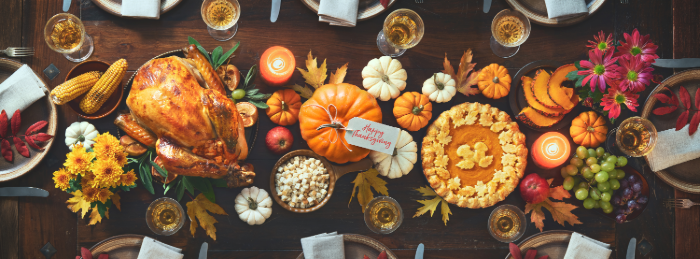
The USDA Food Safety and Inspection Service (FSIS) lists three safe ways to thaw a turkey: in the refrigerator, in cold water or in the microwave oven.⁶
- Refrigerator (40°F or below): Allow approximately 24 hours for every 4 to 5 pounds.⁶
- Cold water: Allow approximately 30 minutes per pound. Keep the turkey wrapped, change the water every 30 minutes, and cook the turkey immediately after it is thawed.⁶
- Microwave: Check your owner’s manual, and cook the turkey immediately after thawing.⁶
A whole turkey is safe when cooked to a minimum internal temperature of 165°F, as measured with a food thermometer. Check the innermost part of the thigh and wing and the thickest part of the breast.⁶
After dinner, discard any turkey, stuffing and gravy left out at room temperature longer than 2 hours.⁶
How can you keep kids and pets safe around the stove?
The American Red Cross recommends keeping kids and pets away from the cooking area and making them stay at least three feet away from the stove.⁷
NFPA adds that kids should stay away from hot food and liquids, because steam or a splash from vegetables, gravy or coffee could cause serious burns.¹
Are your smoke alarms working?
Before the big day, make sure your smoke alarms are working by pushing the test button.¹ The Red Cross recommends a smoke alarm near your kitchen, on each level of your home and near sleeping areas, and testing it each month.⁷
What is the right first aid for a burn?
The American Red Cross says to apply cool, clean running water to a burn as quickly as possible.⁸
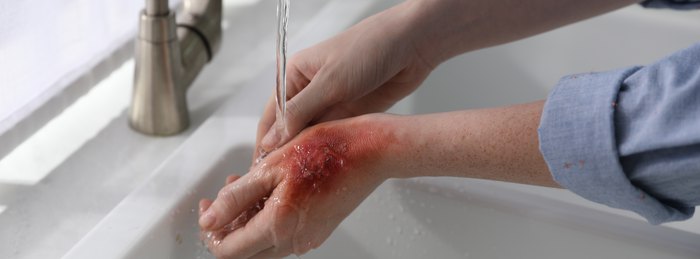
- Remove any clothing or jewelry at the burn site, unless it is stuck to the burned area.⁸
- Place the burn under clean, cool, running water for 5 to 20 minutes. Lukewarm water is OK if cool water is not available.⁸
- Do not use ice, which may further damage the skin. Do not use butter or other greasy substances, which can seal in the heat.⁸
- Loosely cover the burn with a clean, dry, non-adhesive dressing.⁸
Keep supplies on hand with our home first-aid essentials checklist.
When should you call 911 for a burn?
The Red Cross says to call 911 when a burn needs immediate emergency medical treatment. That includes burns through deep layers of skin, burns to the face, mouth, nose, hands, feet, joints or groin, and burns in very young or elderly people.⁸
Do some burns need a burn center?
Yes. American Burn Association (ABA) guidelines for medical teams list full thickness burns, partial thickness burns covering 10% or more of total body surface area, and deep burns to the face, hands, feet, genitals or joints among the injuries that call for immediate consultation with a burn center. The ABA notes that these guidelines are not intended for self-assessment.⁹
If someone is seriously hurt, call 911. When the medical crew at the scene determines that a patient needs a higher level of care quickly, they may request a helicopter. At the scene, the EMS crew requests the closest, most appropriate helicopter that’s available, and a membership card or sticker doesn’t change which one is sent.
How does PHI Cares membership work?
If you need a medically necessary flight by PHI Air Medical or a cooperative partner, PHI bills your insurance company, not you, and works with them to make sure they pay what your policy covers. PHI accepts that payment as payment in full, so members have $0 out-of-pocket responsibility for medically necessary flights by PHI Air Medical or a cooperative partner.
PHI Cares is a membership, not insurance.
A household membership covers your spouse, dependents living at the same address, and up to 3 additional people at the same address.
For a transfer between hospitals, you or your family can tell the hospital about your PHI Cares membership and ask for PHI Air Medical.
Coverage starts five days after we receive your completed application and payment. The waiting period is waived for unforeseen events during that time, which are reviewed case by case.
PHI Cares membership starts at $75 a year for your household. See plans and join, or call 1-888-435-9744.
Membership in the PHI Cares Program is not an insurance product. PHI Cares does not cover and will not pay or reimburse you for services performed by any other air medical transport services provider or any ground ambulance services provider.
Frequently Asked Questions
How do you put out a grease fire?
Slide a lid over the pan and turn off the burner, and leave the cover on while the pan cools. Never throw water on a grease fire. If the fire does not go out, get everyone out and call 911 from outside.²
How long does it take to thaw a turkey?
In the refrigerator, allow approximately 24 hours for every 4 to 5 pounds. In cold water, allow approximately 30 minutes per pound and change the water every 30 minutes.⁶
What should you do right after a burn?
Place the burn under clean, cool, running water for 5 to 20 minutes. Do not use ice or butter. Call 911 when a burn needs immediate emergency medical treatment.⁸
What does PHI Cares membership cover?
If you need a medically necessary flight by PHI Air Medical or a cooperative partner, PHI bills your insurance company, not you, and works with them to make sure they pay what your policy covers. PHI accepts that payment as payment in full, so members have $0 out-of-pocket responsibility for medically necessary flights by PHI Air Medical or a cooperative partner.
Does a PHI Cares membership change which helicopter is sent?
No. At the scene, the EMS crew requests the closest, most appropriate helicopter that’s available, and a membership card or sticker doesn’t change which one is sent. For a transfer between hospitals, you or your family can tell the hospital about your PHI Cares membership and ask for PHI Air Medical.
How much does PHI Cares cost?
PHI Cares membership starts at $75 a year for your household.
Sources
¹ National Fire Protection Association. Thanksgiving safety tips. nfpa.org
² National Fire Protection Association. Safety with cooking equipment. nfpa.org
³ U.S. Fire Administration. Cooking Fire Safety. usfa.fema.gov
⁴ U.S. Consumer Product Safety Commission. Make it a “Home Safe Home” for the Holidays. cpsc.gov
⁵ U.S. Fire Administration. Turkey Fryer Fire Safety. usfa.fema.gov
⁶ USDA Food Safety and Inspection Service. Let’s Talk Turkey: A Consumer Guide to Safely Roasting a Turkey. fsis.usda.gov
⁷ American Red Cross. Cooking leading cause of U.S. home fires; responsible for thousands of injuries every year. redcross.org
⁸ American Red Cross. Burns: How To Help. redcross.org
⁹ American Burn Association. Guidelines for Burn Patient Referral. ameriburn.org