
Honoring the Power of Nurses: How PHI Air Medical Flight Nurses Bring ICU-Level Care to the Sky
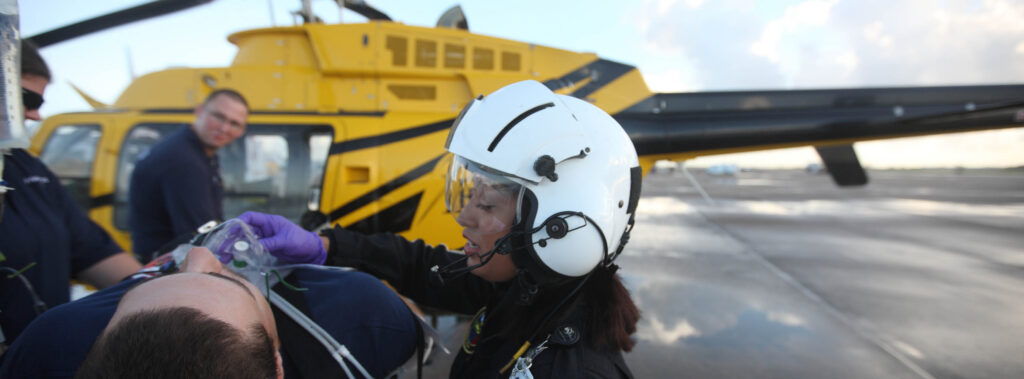
National Nurses Week celebrates the most trusted profession in America. The American Nurses Association has chosen “The Power of Nurses™” as this year’s theme, marking the ANA’s 130th anniversary and recognizing the profound impact nurses have on healthcare, communities, and individual lives.¹
At PHI Air Medical, we celebrate every nurse — and we shine a special light on the nurses who choose one of the most demanding specialties in the profession: flight nursing. Our PHI Air Medical flight nurses bring ICU-level critical care to patients in remote scenes, on rural highways, and during interfacility transfers to higher-level care. They work shoulder-to-shoulder with flight paramedics aboard aircraft that serve more than 80 air medical bases across the United States, often making the difference between a good outcome and a tragic one.
This Nurses Week, we honor their training, their composure under pressure, and their unwavering commitment to patients and families during the worst moments of their lives. We also remind every household across our service area that PHI Cares membership is the financial protection that lets families focus on care — not cost — when a flight is medically necessary. PHI Cares members pay $0 out-of-pocket for medically necessary PHI Air Medical transports.
The Power of Nurses in American Healthcare
Nurses are the largest group of healthcare professionals in the United States. According to the U.S. Bureau of Labor Statistics, more than 3.3 million registered nurses practice nationwide, and registered nursing remains one of the fastest-growing occupations in the country.²
The Nurses Week theme — “The Power of Nurses” — captures something every patient, family member, and clinician already knows: nurses transform care.
For PHI Air Medical, that “power” takes a specific form. It looks like a flight nurse stabilizing a multisystem trauma patient on a two-lane rural highway. It looks like an experienced clinician managing an active obstetric hemorrhage at 3,000 feet. It looks like steady hands on a ventilator setting during a 45-minute interfacility transfer to a comprehensive stroke center. Every flight tells the same story: a nurse, fully present, making decisions that save lives.
What Makes Flight Nursing Different
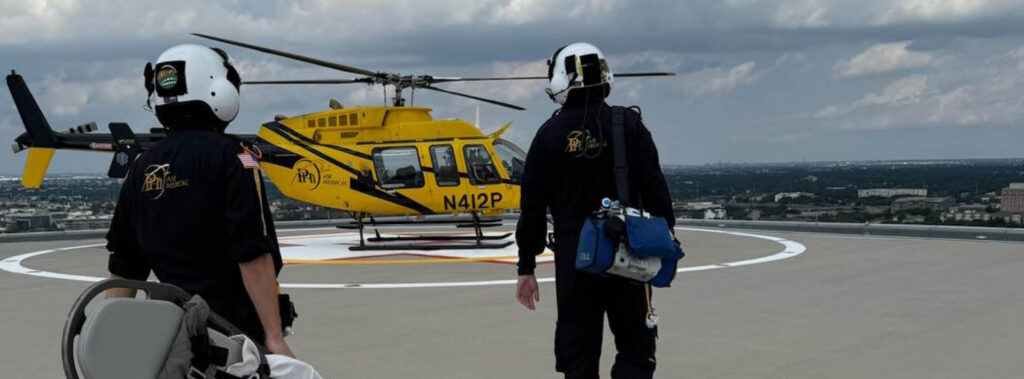
Flight nursing is one of the most rigorously credentialed specialties in healthcare. The Commission on Accreditation of Medical Transport Systems (CAMTS) — the nonprofit body that accredits air and ground medical transport programs across the United States and Canada — requires every transport nurse to hold a transport-specific credential beyond their RN license.³
Most PHI Air Medical flight nurses hold the Certified Flight Registered Nurse (CFRN®) credential, administered by the Board of Certification for Emergency Nursing (BCEN). The CFRN exam covers the full spectrum of flight nursing care for patients of all ages, including trauma, cardiology, neurology, pediatrics, neonatology, and high-risk obstetrics.⁴ Earning the CFRN typically requires years of critical care or emergency nursing experience before sitting for the exam — and CAMTS-accredited programs maintain ongoing continuing education requirements long after initial certification.
In addition to the CFRN, flight nurses train and recertify in:
- Advanced Cardiac Life Support (ACLS)
- Pediatric Advanced Life Support (PALS)
- Neonatal Resuscitation Program (NRP)
- Advanced trauma certification (TNCC, ITLS, or equivalent)
- High-risk obstetric and neonatal transport competencies
- Advanced airway management, including rapid sequence intubation
- Mechanical ventilation, including transport ventilators and ECMO familiarity
- Hemodynamic monitoring, including arterial lines, central lines, and IABP
This depth of training matters because flight nurses operate with significant autonomy in the aircraft. Once the helicopter lifts off, the flight nurse and flight paramedic deliver direct patient care while staying in real-time communication with a board-certified emergency or critical care doctor available by radio or phone for orders, guidance, and clinical decision support throughout the flight.
The PHI Air Medical Flight Team
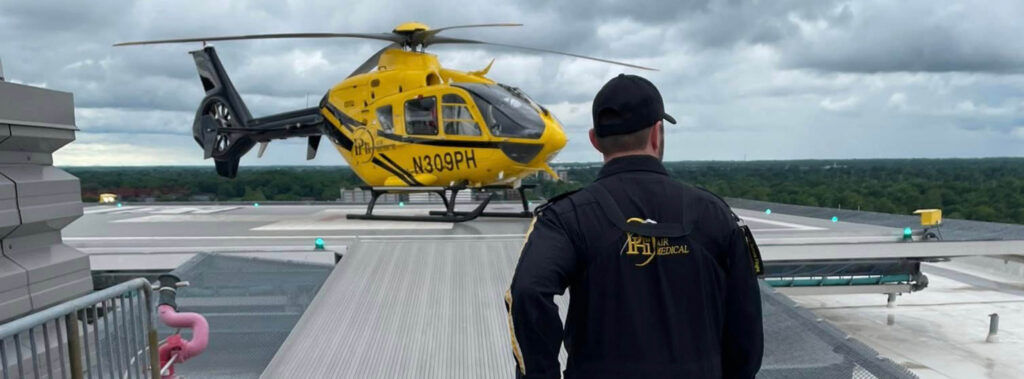
Every PHI Air Medical aircraft is staffed with a critical care flight nurse and a flight paramedic working as a team, supported by an online medical control physician who provides real-time clinical oversight throughout the mission. Both flight clinicians are trained to manage the same patient population — multisystem trauma, acute stroke, cardiac emergencies, pediatric and neonatal patients, and high-risk obstetric cases — and they share decisions and procedures throughout the flight, with physician consultation a radio call away.
What does that look like in practice? Consider a single example. A rural hospital in our service area calls for an interfacility transfer of a 28-year-old patient with severe preeclampsia, 33 weeks pregnant, headed to a maternal-fetal medicine center 90 air miles away. By the time the PHI Air Medical aircraft arrives:
- The flight nurse and flight paramedic have already received a clinical handoff from the dispatch center and the sending physician.
- They land, stabilize the patient, and confirm IV access, magnesium sulfate infusion rate, and antihypertensive medications.
- During the flight at roughly 3,000 feet, the flight nurse continuously monitors maternal blood pressure, fetal heart tones, and reflexes, while the flight paramedic manages airway readiness, IV pumps, and contingency planning.
- If the patient deteriorates or a clinical question falls outside standing orders, the crew consults the online medical control physician for additional orders.
- The team radios ahead to the receiving maternal-fetal medicine team, providing real-time clinical updates so specialists are ready the moment the aircraft lands.
The patient transitions from rural ED to specialty care with no gap in monitoring and no gap in critical care expertise. That continuity is the power of flight nursing in action.
For more on how PHI Air Medical bridges the rural healthcare gap, read our blog The Essential Role of Air Ambulance Services in Rural Healthcare.

Inside the Aircraft: An ICU at 3,000 Feet
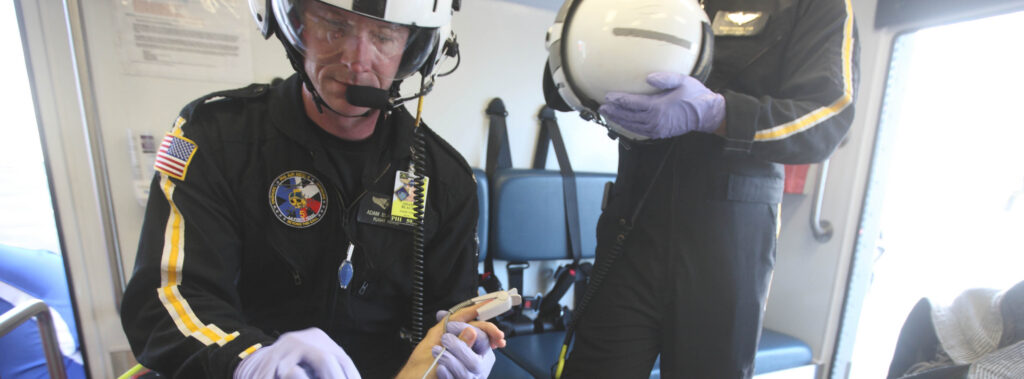
PHI Air Medical aircraft are configured as flying intensive care units. The flight nurse practices in a space the size of a walk-in closet, with a patient who is often unstable, in an environment that vibrates, banks, and changes altitude. Despite those conditions, the standard of care is the standard of care — the same protocols that govern hospital ICUs apply at altitude.
Equipment carried on most PHI Air Medical aircraft includes:
- A transport ventilator capable of supporting infants through adults
- Cardiac monitoring with 12-lead ECG, capnography, and invasive pressure monitoring
- IV infusion pumps running multiple critical drips simultaneously
- Advanced airway equipment including video laryngoscopy
- Warmed whole blood and blood products on board at most bases for hemorrhage emergencies
- Neonatal isolettes at bases that serve communities with frequent neonatal transfers
- Point-of-care lab testing for blood gases and key chemistry values
Read more about how blood products in the air help save lives in our blog Blood on Board: How Blood Products in the Air Help Save Lives.
The flight nurse is the clinician who wields all of this — running infusions, titrating sedation, managing the ventilator, drawing labs, communicating with the medical control physician and the receiving hospital, and caring for the patient and family every minute of the flight. It is intensive care in the truest sense.
The Mental and Physical Demands of Flight Nursing
Flight nurses work in conditions most clinicians never face. Research published in Air Medical Journal and other peer-reviewed sources shows that transport clinicians experience higher rates of occupational stress than many hospital-based peers, driven by the unpredictability of mission profiles, exposure to severe trauma, and the safety considerations inherent in aviation.⁵
Flight nurses train for the worst moments — pediatric drownings, mass casualty incidents, severe obstetric hemorrhages, fatal motor vehicle crashes — and then carry those experiences home. Resilience is not optional in this profession; it is a core competency that PHI Air Medical supports through peer support programs, critical incident stress management resources, and a culture that recognizes the human behind the patch.
Why PHI Cares Membership Matters During Nurses Week
Every flight a PHI Air Medical nurse takes involves a patient and a family in the worst hour of their life. The care delivered at altitude is extraordinary. The bill that follows can also be extraordinary.
Air ambulance flights involve a specialized aircraft, a highly trained crew, advanced monitoring and medications, and often blood products — all on short notice. Even with strong health insurance, families can face deductibles, coinsurance, and out-of-network charges that add up quickly.
A PHI Cares membership removes that worry entirely. When a PHI Cares member takes a medically necessary flight on PHI Air Medical, we bill the insurance company directly, accept what insurance pays as payment in full, and absorb the rest. The member household pays $0 out-of-pocket.
This Nurses Week, the most meaningful way for households across our service area to honor the work flight nurses do is to make sure they can do that work without families worrying about the cost. Enroll in PHI Cares before an emergency happens — coverage cannot be applied retroactively after a flight occurs.
One Membership Covers Your Entire Household
A PHI Cares household membership covers every eligible member of the household under one affordable enrollment. Spouses, partners, children, and household dependents are all protected for medically necessary PHI Air Medical flights. Enroll once, protect everyone.
Join PHI Cares today and give your family the same peace of mind that nurses give their patients every day.
Five Ways to Honor Nurses This Week
Nurses Week is a chance for every household to acknowledge the people who care for us in our most vulnerable moments. Five simple, meaningful ways to celebrate:
- Thank a nurse personally. A handwritten card, a text, or a brief in-person message means more than nurses say it does.
- Use the official hashtags. Share a story, a photo, or a tribute on social media with #ThePowerOfNurses and #NursesLightUpTheSky.
- Donate to a nursing scholarship or relief fund. The American Nurses Foundation supports nurses and nursing students nationwide.
- Advocate for safe staffing. Contact elected representatives about safe staffing ratios, nurse wellness programs, and nursing education funding.
- Protect the nurses who fly for your community. Enrolling in PHI Cares membership means a flight nurse responding to your family’s emergency can focus entirely on patient care — not on what the flight will cost the household.
Frequently Asked Questions
What is the theme of Nurses Week 2026?
The American Nurses Association theme for 2026 is “The Power of Nurses™,” marking the ANA’s 130th anniversary and recognizing the profound impact nurses have on healthcare, communities, and individual lives.
What credentials do PHI Air Medical flight nurses hold?
PHI Air Medical flight nurses hold an active RN license plus a transport-specific certification — most commonly the Certified Flight Registered Nurse (CFRN®) issued by the Board of Certification for Emergency Nursing. They also maintain ACLS, PALS, NRP, and advanced trauma certifications, and meet the rigorous standards set by the Commission on Accreditation of Medical Transport Services (CAMTS).
Does a flight nurse work alone, or with a doctor?
Every PHI Air Medical mission is a team effort. Inside the aircraft, the flight nurse and flight paramedic work side by side. They are supported by an online medical control physician — a board-certified emergency or critical care doctor available by radio or satellite phone for real-time orders — and the receiving hospital’s specialist team is briefed by the crew before the aircraft lands.
What does a flight nurse do during a PHI Air Medical transport?
A PHI Air Medical flight nurse delivers ICU-level critical care during the entire flight: continuous monitoring, ventilator and infusion management, advanced airway support, blood product transfusion when indicated, and real-time communication with the online medical control physician and the receiving hospital. The flight nurse and flight paramedic work as a team and share decisions and procedures throughout the mission.
How does PHI Cares membership protect my family from air ambulance costs?
When a PHI Cares member takes a medically necessary flight on PHI Air Medical, PHI Cares bills the insurance company directly, accepts the insurance payment as payment in full, and absorbs the rest. The member household pays $0 out-of-pocket. One household membership covers every eligible member of the household.
Where does PHI Air Medical operate?
PHI Air Medical operates more than 80 air medical bases across the United States, serving rural and underserved communities. PHI Cares membership benefits apply across our 68 PHI Cares membership service area bases. Visit our coverage map to see if your area is covered.
When should I enroll in PHI Cares membership?
Enroll before an emergency happens — coverage cannot be applied to a flight that has already occurred. Households in rural areas, families with high-risk medical conditions, and anyone who spends significant time outdoors or on rural highways benefit most from enrolling well ahead of any need.
Sources
¹ American Nurses Association. National Nurses Week: The Power of Nurses™. nursingworld.org
² U.S. Bureau of Labor Statistics. Occupational Outlook Handbook: Registered Nurses. U.S. Department of Labor. bls.gov/ooh/healthcare/registered-nurses.htm
³ Commission on Accreditation of Medical Transport Systems (CAMTS). Accreditation Standards. camts.org/standards
⁴ Board of Certification for Emergency Nursing (BCEN). Certified Flight Registered Nurse (CFRN) Certification. bcen.org/cfrn
⁵ Vincent-Lambert C, Mottershaw T. Critical Incidents and Burnout in Air Medical Transport Crews. Air Medical Journal. Sage/Elsevier.