
Can Medical Helicopters Land Anywhere? How Landing Zones Work on Highways, Fields, and Parking Lots
Answer:
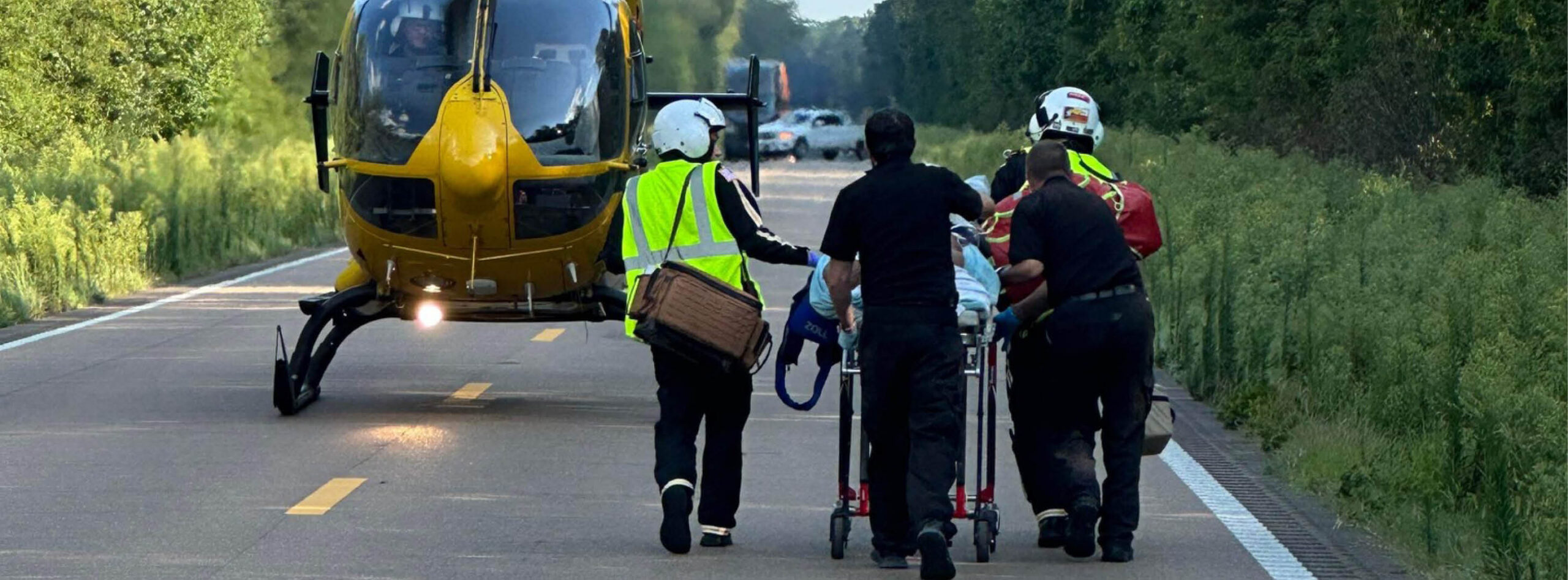
Medical helicopters can land in many places, but not literally anywhere. Helicopter emergency medical services are designed to reach patients where emergencies occur, which may be on highways, fields, parking lots, or other open areas. Air medical crews coordinate with EMS, fire departments, and law enforcement to secure a temporary landing zone (LZ) that is safe for the aircraft, responders, and the public. Federal aviation regulations allow helicopters to land away from airports when the pilot determines the location can be used safely and without creating hazards.¹ ²
Programs such as PHI Air Medical operate helicopter emergency medical services across multiple states and work closely with local responders to help patients reach appropriate medical facilities when time matters.
Key Takeaways
- Medical helicopters can land off-airport when the site is safe and approved by the pilot.
- A commonly taught guideline for helicopter landing zone size is about 100 feet by 100 feet of clear space, though actual requirements vary by aircraft and conditions.
- Landing zones are secured through trained procedures involving EMS, fire departments, and law enforcement.
- PHI Air Medical works with regional emergency response systems to bring advanced care to patients where emergencies occur.
- PHI Cares membership helps households plan ahead for eligible air medical transport costs.
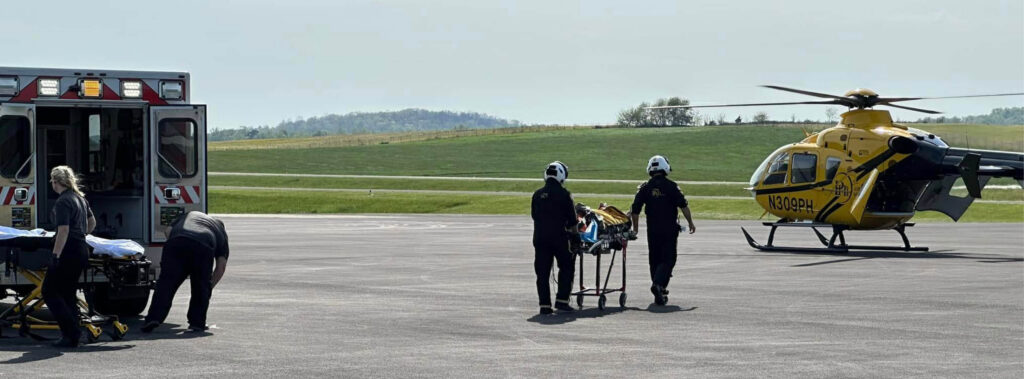
EMS and flight crews move a patient toward a PHI Air Medical helicopter during a coordinated transfer.
Why Air Medical Helicopters Use Temporary Landing Zones
Medical emergencies rarely occur next to hospital helipads. Serious injuries, cardiac events, and other life-threatening situations may happen on rural roads, at job sites, in neighborhoods, or in remote outdoor areas.
Air medical programs are designed to reach patients where they are.
Organizations such as PHI Air Medical operate helicopters equipped with advanced medical equipment and staffed by highly trained flight crews. These aircraft allow medical teams to respond rapidly and transport patients to trauma centers or specialty hospitals when appropriate.
Temporary landing zones allow the helicopter to land close to the patient, reducing delays and helping crews move the patient toward advanced care as efficiently as possible.
Air medical operations also rely on centralized coordination. The PHI Air Medical communications center and PHI Air Medical operations teams monitor flights, weather conditions, and operational factors to support crews and help maintain safe operations.
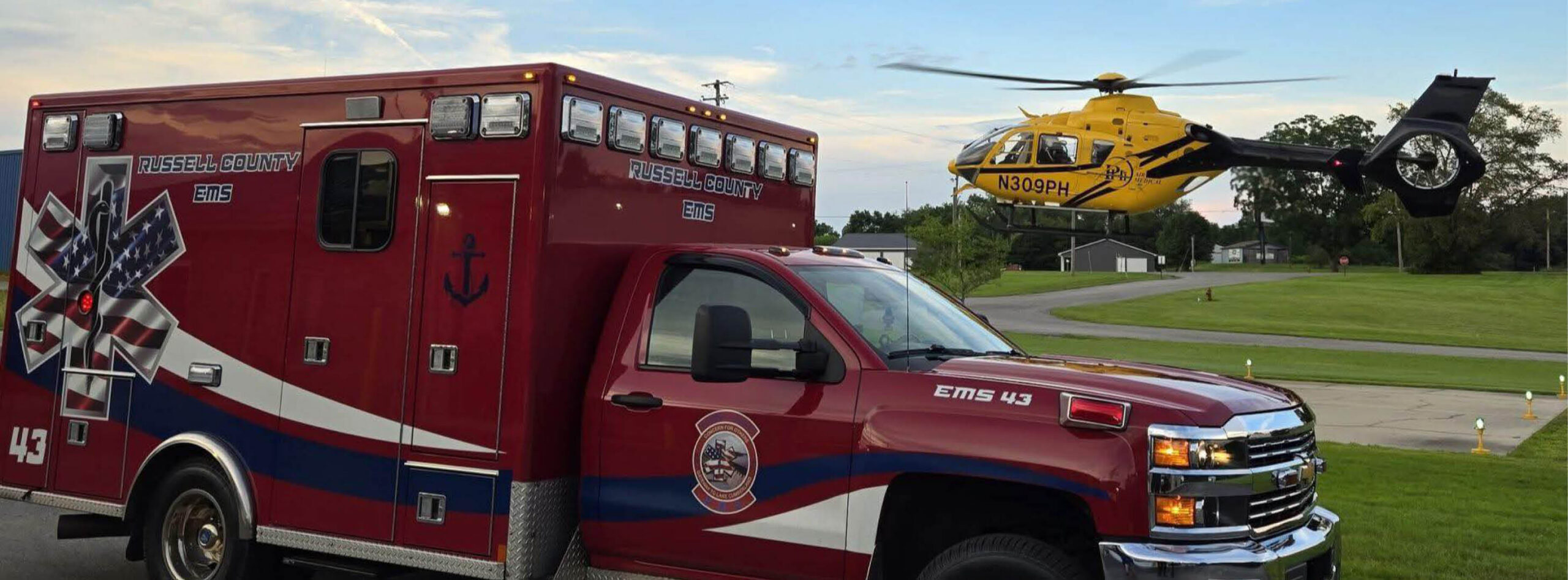
A PHI Air Medical helicopter lands near an EMS ambulance at a secured roadside landing zone.
What Is a Helicopter Landing Zone?
A landing zone (LZ) is a temporary area identified for helicopter operations outside of a traditional airport or helipad. These landing zones are selected because they provide the safest nearby location where a helicopter can land and transfer a patient.
A safe landing zone typically provides:
- Adequate space for the aircraft
- Clear approach and departure paths
- Minimal obstacles such as wires, trees, or poles
- A controlled perimeter to keep bystanders at a safe distance
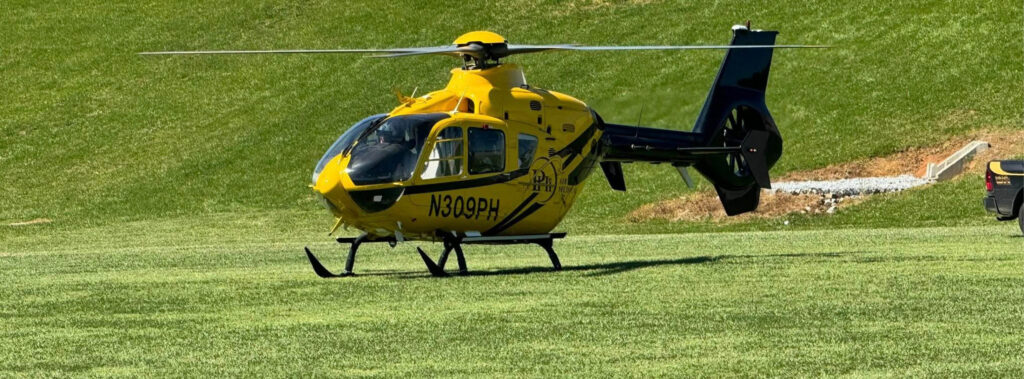
An open field provides a temporary landing zone for a PHI Air Medical helicopter during an emergency response.
How Big Does a Landing Zone Need to Be?
A commonly taught rule of thumb is approximately 100 feet by 100 feet of clear space. This size is widely used in responder training because it is simple and practical.
However, the pilot always determines whether a landing zone is safe. The actual size needed can vary depending on:
- Aircraft type
- Wind conditions
- Terrain slope
- Obstacles near the landing area
- Day or night operations
If the location does not meet safety requirements, the helicopter may reposition to a different landing zone nearby.
Common Landing Zone Hazards
Even open spaces must be evaluated carefully. The most common hazards include:
- Overhead wires, which can be difficult to see from the air
- Trees, poles, and light standards
- Loose debris that could become airborne in rotor wash
- Uneven or soft ground
- Limited approach or departure paths
Why Do Medical Helicopters Land on Highways?
Highways are one of the most common temporary landing zones, particularly during serious vehicle collisions.
When traffic is stopped and the area is secured, highways can provide long, relatively flat surfaces that allow helicopters to land close to the patient.
How Highway Landing Zones Are Established
First responders follow a structured process:
- Law enforcement stops trafficand establishes a safety perimeter.
- Fire and EMS personnel clear debrisand identify hazards.
- Responders attempt to create approximately 100 ft by 100 ft of clear spacewhen possible.
- The pilot evaluates the landing zonebefore committing to land.
If conditions appear unsafe, the pilot may request adjustments or choose a different landing location.
Are Helicopters Allowed to Land on Highways?
Yes. Under Federal Aviation Administration regulations, helicopters may land away from airports if the operation can be conducted safely and does not create hazards.¹
Air ambulance operations commonly fall under 14 CFR Part 135, which governs operational requirements such as crew training, maintenance standards, and safety procedures.²
Why Do Medical Helicopters Land in Fields?
In rural areas, open fields often provide the safest available landing zones. These locations typically offer:
- Large open spaces
- Fewer vertical obstacles
- Direct access to remote patients
For patients located far from trauma centers, landing in a nearby field can reduce transport time and help connect the patient with specialized care more quickly.
Hazards Evaluated in Rural Landing Zones
Even open land must be evaluated carefully. Flight crews and responders assess:
- Utility lines and fencing
- Soft or uneven ground
- Irrigation equipment
- Farm machinery or animals nearby
The National Transportation Safety Board emphasizes that risk assessment and pilot decision-making are central to safe helicopter emergency medical operations.³
Why Do Medical Helicopters Land in Parking Lots?
In suburban and urban areas, parking lots are frequently used landing zones because they offer relatively flat paved surfaces and convenient access for ambulances.
Parking lots often provide:
- Stable asphalt or concrete surfaces
- Clear boundaries
- Direct vehicle access for EMS
However, these locations can also introduce hazards that responders must address quickly.
Urban Landing Zone Challenges
Common obstacles include:
- Light poles
- Signage
- Overhead wires
- Pedestrian traffic
- Parked vehicles
Fire crews and law enforcement help secure entrances and keep the area clear while the helicopter lands and the patient is transferred.
How Landing Zone Training Works
Landing zone operations are not improvised. Many communities train regularly for these situations.
Air medical programs frequently coordinate with local agencies to review landing zone procedures, safety protocols, and communication practices.
What First Responders Are Trained to Do
Landing zone training typically includes:
- Identifying a safe landing area near the patient
- Establishing a 100 ft by 100 ft clear space when possible
- Creating a safety perimeter
- Clearing debris that could become airborne
- Communicating hazards to the flight crew
What the Pilot and Flight Crew Evaluate
While the landing zone is being secured, the pilot and crew evaluate:
- Wind direction and approach path
- Obstacles such as wires and poles
- Surface stability and slope
- Lighting and visibility conditions
- Safe departure routes
The pilot has final authority to accept or reject a landing zone.
Why Air Medical Access Matters for Communities
Air medical transport plays an important role in modern emergency response systems.
According to the Centers for Disease Control and Prevention, traumatic injury remains one of the leading causes of death in the United States.⁴ Rapid access to advanced medical care can be critical in severe emergencies.
Programs such as PHI Air Medical support hospitals, EMS agencies, and communities by providing rapid response capabilities when patients require specialized care or faster transport.
Landing zones in highways, fields, or parking lots may look unusual, but they represent carefully coordinated emergency response operations designed to help patients reach the care they need.
Understanding PHI Cares Membership
When a serious medical emergency occurs, families want to focus on the patient and their recovery.
PHI Cares membership helps individuals and families plan ahead for the financial side of air medical transport with PHI Air Medical.
Membership options help reduce out-of-pocket costs for eligible flights within the PHI Air Medical service area, allowing families to focus on medical care rather than unexpected bills.
You can learn more about the program at the PHI Cares Membership page and review how membership works in your area.
Frequently Asked Questions
How big does a helicopter landing zone need to be?
A commonly taught guideline is about 100 feet by 100 feet of clear space, but the exact size depends on the aircraft, weather conditions, obstacles, and lighting. The pilot determines whether the landing zone is safe.
Why do medical helicopters land on highways?
Highways can provide flat, accessible landing areas near major accidents. When traffic is stopped and responders secure the scene, they can become safe temporary landing zones.
Who decides if a landing zone can be used?
The pilot has final authority to determine whether a landing zone is acceptable. Ground responders may recommend locations, but the pilot decides whether it is safe for the aircraft.
Can medical helicopters land anywhere?
No. Helicopters can land in many places, but the site must be secured, free of hazards, large enough for the aircraft, and approved by the pilot under federal aviation safety rules.¹
Sources
¹ Federal Aviation Administration. 14 CFR Part 91 — General Operating and Flight Rules.
² Federal Aviation Administration. 14 CFR Part 135 — Operating Requirements: Commuter and On Demand Operations.
³ National Transportation Safety Board. Helicopter Emergency Medical Services safety communications.
⁴ Centers for Disease Control and Prevention. National Center for Injury Prevention and Control injury data.