
Hands-Only CPR: How Ordinary Bystanders Change Cardiac Arrest Outcomes

Hands-only CPR is the simplest emergency skill most adults can learn. September 29 is World Heart Day, which makes this month a good deadline to finally learn it. The American Heart Association reports that more than 436,000 Americans die of cardiac arrest each year.¹ The reason is rarely a lack of medical care. Instead, it is the gap between the moment someone collapses and the first chest compression.
In this guide, we explain what cardiac arrest is, how hands-only CPR works, why AEDs matter, and what the survival data actually shows. We also look at what happens after resuscitation in a rural community, and how a PHI Cares Membership helps households prepare with $0 out-of-pocket responsibility for medically necessary flights by PHI Air Medical or a cooperative partner.
Cardiac Arrest Is Not a Heart Attack
The two get confused constantly, and the difference determines what a bystander should do.
A heart attack is a circulation problem. A blocked artery starves part of the heart muscle of blood. The person is usually awake and talking, with chest pressure, shortness of breath, nausea, or arm and jaw pain. Our post on heart attack symptoms and why fast action matters covers the warning signs in detail.
Cardiac arrest is an electrical problem. The heart stops pumping effectively. The person collapses, becomes unresponsive, and stops breathing normally. Sometimes they gasp irregularly, which is called agonal breathing and is not normal breathing.
A heart attack can trigger cardiac arrest, so the two are related. Still, the bystander action differs. For a heart attack, call 911 and keep the person calm and still. For cardiac arrest, call 911 and start compressions immediately.
Why the First Few Minutes Decide the Outcome
Brain cells begin to die within minutes without circulating blood. Bystander CPR keeps oxygenated blood moving until a defibrillator or an EMS crew arrives. The effect on survival is measurable.
According to the American Heart Association, CPR performed immediately can double or triple a person’s chance of surviving an out-of-hospital cardiac arrest.¹ Yet bystander CPR is still performed in only about 40 percent of cases nationally.¹ That gap is not a medical problem. It is a training and confidence problem, and it is fixable.
Location matters too. Roughly 70 percent of cardiac arrests happen at home, where the bystander is usually a family member.¹ In practical terms, the person most likely to perform CPR on you is someone who lives with you. That is a good reason to learn it together.
The rural time factor
Response times stretch as distance grows. In a rural county, the interval between a 911 call and an ambulance arrival often runs well beyond the urban average. Every minute in that window is a minute when a bystander’s hands are the only circulation the patient has. Consequently, hands-only CPR training matters more in small communities, not less.
Rural households can close part of that gap with planning. Post the address at the driveway so it is visible at night. Make sure everyone in the house can say it out loud under stress. Finally, make sure more than one adult knows what to do while help is on the way.
How to Perform Hands-Only CPR
Hands-only CPR uses chest compressions without rescue breaths. The American Heart Association recommends it for untrained bystanders who witness an adult collapse, because it is easier to learn, easier to remember, and easier to start.²
- Step 1: Check for response. Tap the person’s shoulder and shout. If they do not respond and are not breathing normally, act.
- Step 2: Call 911. Put the phone on speaker so the dispatcher can coach you. Send someone else to find an AED.
- Step 3: Position your hands. Kneel beside the person. Place the heel of one hand in the center of the chest, on the lower half of the breastbone. Put your other hand on top and interlace your fingers.
- Step 4: Push hard and fast. Keep your arms straight and your shoulders directly over your hands. Compress at least 2 inches deep for an adult, at a rate of 100 to 120 compressions per minute. Let the chest recoil fully between compressions.
- Step 5: Do not stop. Continue until the person shows signs of life, an AED is ready to analyze, or EMS takes over. Swap with another bystander every two minutes if you can, because compression quality drops as you tire.
The rate matches many familiar songs at roughly 100 to 120 beats per minute. Pick one you know and count to it.
Use the AED as soon as it arrives
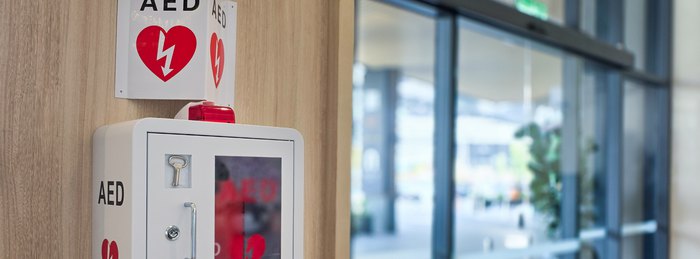
An automated external defibrillator talks you through every step out loud. Turn it on, apply the pads as pictured, and let it analyze. If it advises a shock, make sure nobody is touching the person, then press the button. Resume compressions immediately afterward.
You cannot shock someone who does not need it. The device analyzes the rhythm first and will not deliver a shock unless one is indicated. That safeguard is why AEDs are placed in schools, gyms, airports, and workplaces for untrained users.
Hands-only CPR in the workplace and at school
Many September safety meetings include a CPR refresher, and that timing works well. Ask three questions at your next one. Where are the AEDs? Who on this shift is currently trained? When was the last drill? Buildings often have equipment that nobody can locate under pressure.
Schools, churches, and community centers benefit from the same review. A five-minute walkthrough that ends with everyone knowing where the AED hangs is time well spent.
What about children and drowning?
For infants, children, and drowning or overdose patients, breaths matter more, because those arrests are usually caused by a lack of oxygen rather than an electrical problem. If you are trained, use conventional CPR with rescue breaths. If you are not trained, compressions alone are still far better than doing nothing.
After Resuscitation: What Happens Next
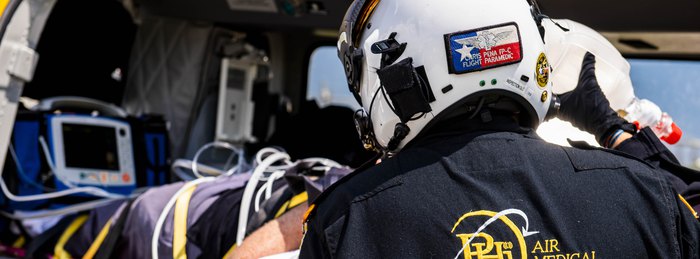
Restoring a pulse is the beginning of care, not the end. Post-arrest patients need targeted temperature management, advanced hemodynamic support, and often urgent cardiac catheterization — services concentrated at larger cardiac centers.
When a patient in a rural community achieves return of spontaneous circulation at a critical access hospital, the sending physician frequently arranges transfer to a facility with a cardiac catheterization lab. PHI Air Medical crews pair a critical care flight nurse with a flight paramedic, supported by an online medical control physician available for real-time orders.³ PHI Air Medical operates 68 membership bases from coast to coast.³
Our post on how air medical teams coordinate with ground EMS explains that handoff, and our guide to medevac flights walks through the process from dispatch to hospital arrival.
How PHI Cares Membership Supports Your Household
Emergency air transport may result in significant out-of-pocket responsibility depending on the situation and your insurance plan. Financial responsibility can vary, and a cardiac emergency is the worst possible time to think about it.
PHI Cares helps households prepare for unexpected emergency transport situations. Members have $0 out-of-pocket responsibility for medically necessary flights by PHI Air Medical or a cooperative partner. PHI Cares works with your insurance provider and accepts the insurance payment as payment-in-full, according to membership terms.
One household membership includes your spouse, dependents living at the same address, and up to 3 additional people at the same address. Coverage begins 5 days after enrollment. Review options on our memberships page, and confirm your area is served using our coverage map.
Make Your Household a Little More Ready This Month
World Heart Day is September 29. Use it as the deadline for three small tasks.
- Learn hands-only CPR. Watch the American Heart Association’s short instructional video, or better, take a class through a local fire department, hospital, or community center.
- Find the nearest AEDs. Check your workplace, school, gym, and place of worship. Know where they hang.
- Talk about the plan. Make sure everyone in the house knows to call 911, put the phone on speaker, and start compressions.
Then handle the paperwork side: one-page medical summaries on the refrigerator, and membership reviewed before it is needed.
Frequently Asked Questions About Hands-Only CPR
What is hands-only CPR?
Hands-only CPR is cardiopulmonary resuscitation using chest compressions without rescue breaths. The American Heart Association recommends it for untrained bystanders who witness an adult suddenly collapse, because it is simpler to learn and faster to start.²
How deep and how fast should compressions be?
Push at least 2 inches deep on an adult chest, at a rate of 100 to 120 compressions per minute, and let the chest recoil fully between compressions.² Depth and rate both matter, and so does minimizing interruptions.
Can I hurt someone by performing CPR?
Rib fractures do happen, particularly in older adults. However, a person in cardiac arrest is clinically dead without intervention, and bystander CPR roughly doubles or triples the chance of survival.¹ Doing nothing carries far greater risk than doing compressions imperfectly.
Does hands-only CPR work for children?
For infants and children, conventional CPR with rescue breaths is preferred, because pediatric arrests usually stem from breathing problems. If you are untrained or unwilling to give breaths, compressions alone remain much better than no CPR at all.
Why might a cardiac arrest patient need air medical transport?
After resuscitation, patients often need a cardiac catheterization lab, targeted temperature management, and intensive care that smaller hospitals cannot provide. When a physician determines a higher level of care is needed quickly, air medical transport can shorten that time. Dispatch always sends the closest first-available resource.
Does a PHI Cares Membership help with a cardiac emergency transport?
Yes. If a medically necessary emergency transport is performed by PHI Air Medical or a cooperative partner, members have $0 out-of-pocket responsibility according to membership terms. After a transport, members should contact the PHI Cares Membership Department so we can coordinate directly with the insurance provider.
Who can enroll in PHI Cares?
Most households in a PHI Cares service area can enroll, and one plan includes your spouse, dependents at your address, and up to 3 additional people at the same address. Federal law does not permit Medicaid participants to enroll in air medical membership programs. See the PHI Cares FAQ page for details and current eligibility information.
Learning hands-only CPR takes about as long as watching a sitcom. It is the rare skill that costs nothing, expires slowly, and may one day matter more than anything else you do that day.
Membership in the PHI Cares Program is not an insurance product. PHI Cares does not cover and will not pay or reimburse you for services performed by any other air medical transport services provider or any ground ambulance services provider.
Sources
¹ American Heart Association. CPR Facts and Stats. cpr.heart.org
² American Heart Association. Hands-Only CPR. cpr.heart.org
³ PHI Air Medical. Official website. phiairmedical.com