
Community Growth and Changing Healthcare Access: Why Air Medical Transport Matters More Each Year
Healthcare access across the United States is changing in ways that influence how quickly patients can reach emergency and specialty care. Population growth, rural hospital instability, and the consolidation of advanced medical services have increased the distance between communities and the treatment they need. These shifts have strengthened the role of air medical transport, especially in regions where ground travel is slowed by geography, limited roadway access, or seasonal conditions.

This article explains how community growth affects access to care, why air medical transport is becoming more important, how PHI Air Medical supports regional emergency systems, and where PHI Cares Membership fits into a landscape where preparation matters more than it once did.
Population Growth and Changing Access to Care
Communities across the country are expanding outward. Many families now live in areas where development has outpaced medical infrastructure. This growth has created new challenges for emergency response.
Growth in exurban and rural-adjacent regions
New housing developments outside major metropolitan centers often lack nearby emergency departments, trauma centers, or specialty hospitals. As a result, ground transport distances for critical emergencies continue to increase.
Impact of rural hospital closures
Rural hospitals have faced significant financial and operational strain for nearly two decades. Many have reduced services or fully closed, forcing residents to travel farther for care.
A federal review by the U.S. Government Accountability Office found that when rural hospitals close, residents must travel longer distances to reach essential medical services¹. These additional miles can lead to longer response times, especially when weather conditions, limited roadway access, or high-traffic corridors slow ground EMS.

Centralization of advanced medical services
Specialty services such as trauma care, cardiac intervention, neonatal intensive care, and stroke treatment are increasingly provided at fewer, often more distant, regional hospitals.
A national study published in JAMA found that nearly 30 percent of Americans cannot reach a Level I or Level II trauma center by ground within 60 minutes². This access gap is most significant in rural and frontier regions and illustrates how geography directly affects time to definitive care.
Together, these trends demonstrate why air medical transport has become essential for patients who require rapid access to advanced treatment.
Why Air Medical Transport Is Becoming More Critical
Air medical transport via air ambulance plays a vital role in bridging the gaps created by longer travel distances, geographic barriers, and the centralization of specialty care.
Geographic and seasonal access challenges
Many regions contain terrain that is difficult for ground EMS to navigate quickly. Rural highways, mountain passes, lakes, forests, and desert landscapes all contribute to longer response times. Seasonal challenges such as snow, flooding, ice, and fire-related road closures can further restrict ground access.
Air medical aircraft can bypass these obstacles and reach appropriate facilities more quickly during conditions that limit roadway travel.
Commuter distances and roadway congestion
Growing commuter populations have created high-traffic corridors with an increased volume of accidents. When ground EMS is delayed by congestion or long distances, air medical teams can significantly reduce transport time by flying directly to the appropriate facility.
Increasing need for interfacility transfers
As healthcare systems consolidate specialty care, community hospitals frequently stabilize patients locally before arranging transport to regional centers. Air medical teams are trained to manage high-acuity patients during these longer transfers and provide timely movement to definitive treatment.
Support for rural EMS systems
Many rural EMS agencies cover wide geographic areas with limited staffing. Volunteer shortages and increased call demand place additional strain on these systems.
Another operational challenge occurs when a local ambulance must leave the community for a long-distance transport. A single transport to a distant hospital can remove the only available ambulance for several hours, leaving residents without immediate ground response capability.
Air medical transport helps relieve this burden. Helicopters can take on long-distance transports, allowing ground EMS crews to remain in their coverage area and respond to new calls. This strengthens overall system readiness and supports communities that already operate with limited resources. Research highlights the important role that air medical services play in rural trauma response³.
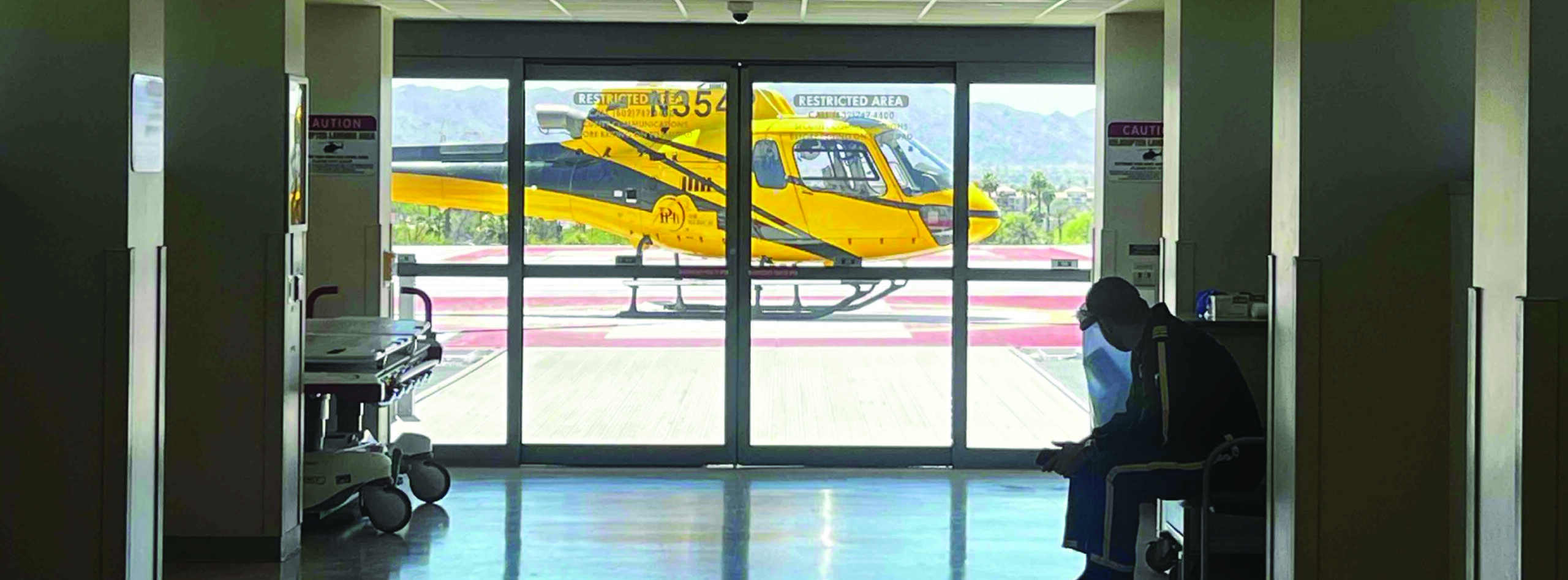
How PHI Air Medical Supports Regional Emergency Systems
PHI Air Medical works closely with EMS agencies, hospitals, and community partners to understand local emergency response challenges. These relationships help identify where long-distance transports impact local resources, how specialty care access varies across regions, and where aviation support can improve overall system reliability.
Ground EMS partners provide insight into call patterns, staffing constraints, and community needs. Hospitals help highlight where specialized services are located and how far patients must travel when advanced care is required.
PHI Air Medical also considers geography, roadway access, weather patterns, and regional transport barriers when determining how aviation resources can support communities effectively. These operational considerations help ensure that aircraft are positioned where they can make the greatest difference.
Where PHI Cares Membership Fits Into Changing Access Patterns
As the distance between communities and specialty care grows, households are taking a more proactive approach to readiness. PHI Cares Membership provides financial protection when a medically necessary transport is performed by PHI Air Medical. Membership covers the out-of-pocket portion of the flight or the portion not covered by a patient’s insurance provider.
Membership is especially helpful for households that:
- Live in expanding communities without nearby specialty hospitals
- Reside in regions affected by rural hospital transitions
- Travel long commuter routes or rural corridors
- Face seasonal weather that slows or limits ground transport
- Depend on distant regional centers for advanced treatment
In these environments, membership offers families a practical way to plan for the financial impact of medically necessary air medical transport.
A Strategic View of the Future
Healthcare access will continue to evolve as population growth, hospital changes, and system strain shape emergency response needs. Seasonal weather events, limited local resources, and long travel distances will continue to influence transport requirements.
Air medical transport will remain a vital link between communities and advanced care. PHI Air Medical will continue collaborating with regional partners to support communities where geography, distance, and limited resources affect emergency response. For households, PHI Cares Membership offers a practical financial planning option in regions where long-distance transport may be required to reach appropriate care.
As communities expand and access patterns shift, readiness becomes increasingly important. Air medical transport will continue supporting communities through these changes, and membership provides families with a way to plan for the financial realities of medically necessary transport.
Frequently Asked Questions
1. Why is air medical transport becoming more important in growing communities?
As communities expand farther from hospitals and specialty centers, the distance to appropriate care increases. Air medical transport helps reduce delays created by long travel distances, geographic limitations, and system strain.
2. What factors are contributing to longer emergency transport times?
Long distances to specialty hospitals, rural hospital closures, seasonal roadway issues, and increased commuter traffic all contribute to extended ground transport times.
3. How do hospital closures influence emergency transport needs?
Hospital closures require residents to travel farther for emergency and specialty care. This increases pressure on both ground and air response systems, especially when patients must be transported long distances to reach the appropriate facility.
4. How does PHI Cares Membership support households?
PHI Cares Membership provides financial protection when a medically necessary transport is performed by PHI Air Medical. It covers the out-of-pocket portion of the flight or the amount not covered by the patient’s insurance provider.
Sources
- U.S. Government Accountability Office. Rural Hospital Closures: Service Availability Impacts.https://www.gao.gov/products/gao-21-93
- Branas CC, MacKenzie EJ, Williams JC, Schwab CW, Teter HM, Flanigan MC, Blatt AJ, ReVelle CS. Access to Trauma Centers in the United States. JAMA.https://pubmed.ncbi.nlm.nih.gov/15928284/
- LogRx. The Role of Air Ambulance Services in Rural Trauma Response.https://logrx.com/blog/the-role-of-air-ambulance-services-in-rural-trauma-response/