
Community Growth and Changing Healthcare Access: Why Air Medical Transport Matters More Each Year
Healthcare access across the United States is changing in ways that affect how quickly patients can reach emergency and specialty care. Population growth, rural hospital closures and the consolidation of advanced medical services have increased the distance between many communities and the treatment they need. These shifts make air medical transport an important part of emergency care, especially where geography, limited roadway access or seasonal conditions make long trips harder.

This article explains how community growth affects access to care, why air medical transport is becoming more important, how PHI Air Medical supports regional emergency systems, and where a PHI Cares membership fits.
Population Growth and Changing Access to Care
Communities across the country are expanding outward. Many families now live in areas where development has outpaced medical infrastructure, which creates new challenges for emergency response.
Growth in exurban and rural-adjacent regions
New housing developments outside major metropolitan areas often lack nearby emergency departments, trauma centers or specialty hospitals, so the distance to care for a serious emergency can be longer.
Impact of rural hospital closures
Many rural hospitals have faced financial and operational strain, and some have reduced services or closed. A U.S. Government Accountability Office review found that after rural hospitals closed, the median distance to common services such as general inpatient care rose about 20 miles, from 3.4 miles in 2012 to 23.9 miles in 2018.1

Centralization of advanced medical services
Specialty services such as trauma care, cardiac intervention, neonatal intensive care and stroke treatment are increasingly provided at fewer regional hospitals. A 2005 study in JAMA estimated that 84.1% of U.S. residents could reach a Level I or II trauma center within 60 minutes, and that 27.7% could do so within an hour only by helicopter. The 46.7 million Americans without access within an hour lived mostly in rural areas.2
Together, these trends show why air medical transport is an important link for patients who need advanced treatment quickly.
Why Air Medical Transport Is Becoming More Important
A joint position statement from the National Association of EMS Physicians (NAEMSP), the American College of Emergency Physicians (ACEP) and the Air Medical Physicians Association (AMPA) says air medical services should accomplish one or more of three goals: starting or continuing advanced or specialty care that isn’t available locally, getting the patient to definitive care faster for time-sensitive treatment, and reaching patients in remote or hard-to-reach places. It also says ground EMS transport is preferred when it can provide the care a patient needs and timely transport to definitive care.3
Geographic and seasonal access challenges
Mountain passes, lakes, forests, deserts and long rural highways can make some trips to a specialty hospital long. Snow, flooding, ice and fire-related road closures can add to that. In these situations, a helicopter can bring a critical care crew to the patient and fly them to the right facility.
Commuter distances and busy corridors
Growing commuter populations have created busy highway corridors, some of them far from specialty hospitals. When the medical crew at the scene determines that a patient needs a higher level of care quickly, they may request a helicopter.
Increasing need for interfacility transfers
As healthcare systems consolidate specialty care, community hospitals often stabilize patients locally before arranging transport to a regional center. A doctor may request a flight to another hospital, and air medical crews are trained to care for critically ill patients during these longer transfers.
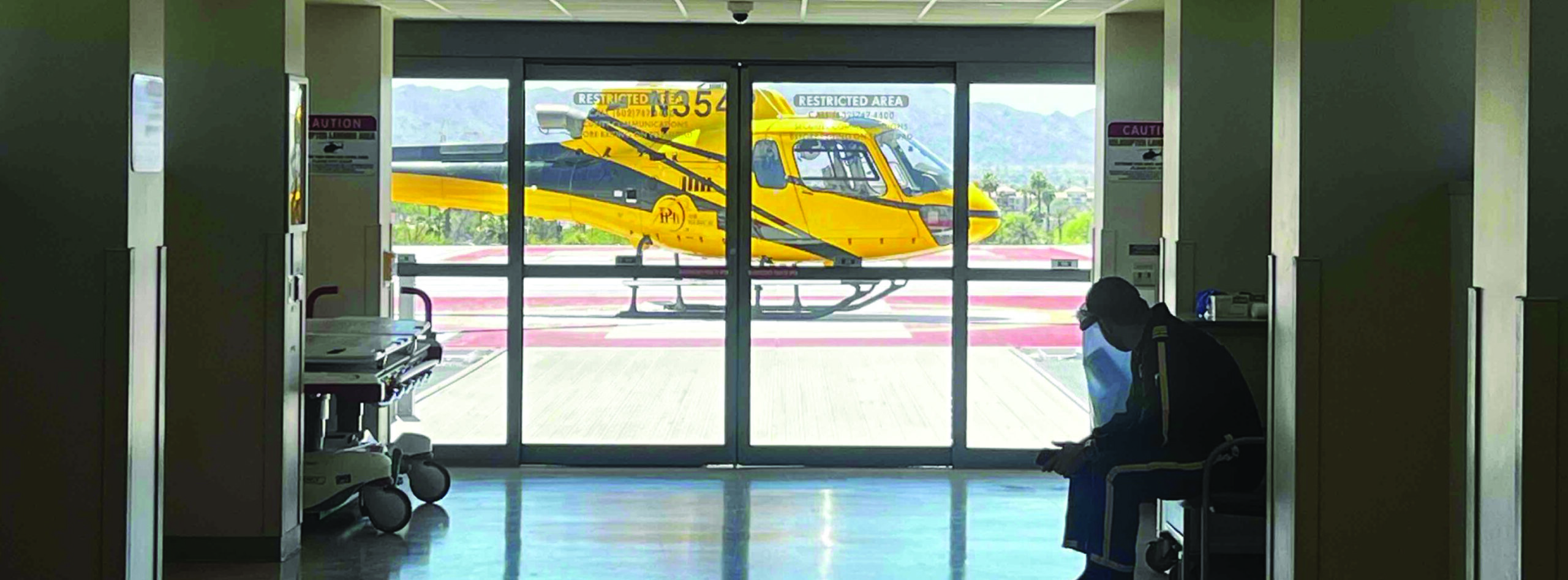
How PHI Air Medical Supports Regional Emergency Systems
PHI Air Medical works with EMS agencies, hospitals and community partners to understand local emergency response needs. Ground EMS partners share insight into call patterns, staffing and community needs, and hospitals help show where specialized services are located and how far patients must travel. PHI Air Medical also considers geography, roadway access and weather when deciding how its aircraft can best support a region.
PHI Air Medical has 71 membership bases in 14 states.4 Its standard medical crew is a flight nurse and a flight paramedic, along with the pilot.5 At the scene, the EMS crew requests the closest, most appropriate helicopter that’s available, and a membership card or sticker doesn’t change which one is sent.
Where PHI Cares Membership Fits
As the distance to specialty care grows, many households are taking a more proactive approach to readiness. PHI Cares is a membership, not insurance. If you need a medically necessary flight by PHI Air Medical or a cooperative partner, PHI bills your insurance company, not you, and works with them to make sure they pay what your policy covers. PHI accepts that payment as payment in full, so members have $0 out-of-pocket responsibility for medically necessary flights by PHI Air Medical or a cooperative partner. For a transfer between hospitals, you or your family can tell the hospital about your PHI Cares membership and ask for PHI Air Medical.
Membership can be especially helpful for households that:
- Live in growing communities without nearby specialty hospitals
- Live in regions affected by rural hospital closures
- Travel long commuter routes or rural corridors
- Face seasonal weather that slows or limits travel
- Depend on distant regional centers for advanced treatment
A household membership covers your spouse, dependents living at the same address, and up to 3 additional people at the same address. Coverage starts five days after we receive your completed application and payment. The waiting period is waived for unforeseen events during that time, which are reviewed case by case.6
PHI Cares membership starts at $75 a year for your household. See plans and join, or call 1-888-435-9744.
Looking Ahead
Healthcare access will keep changing as population growth, hospital changes and system strain shape emergency response needs. Air medical transport will remain an important link between communities and advanced care, and PHI Air Medical will keep working with regional partners where geography, distance and limited resources affect emergency response. For households, a PHI Cares membership is a practical way to plan ahead.
Membership in the PHI Cares Program is not an insurance product. PHI Cares does not cover and will not pay or reimburse you for services performed by any other air medical transport services provider or any ground ambulance services provider.
Frequently Asked Questions
Why is air medical transport becoming more important in growing communities?
As communities expand farther from hospitals and specialty centers, the distance to appropriate care increases. A helicopter can bring a critical care crew to the patient and fly them to a hospital that can treat them.
What factors add time to reaching emergency care?
Long distances to specialty hospitals, rural hospital closures, seasonal road conditions and busy commuter corridors can all add time to reaching the right care.
How do rural hospital closures affect emergency care?
When a rural hospital closes, residents must travel farther for care. A U.S. Government Accountability Office review found that the median distance to general inpatient care rose about 20 miles after rural hospitals closed.
Who decides whether a helicopter is sent?
When the medical crew at the scene determines that a patient needs a higher level of care quickly, they may request a helicopter. At the scene, the EMS crew requests the closest, most appropriate helicopter that’s available, and a membership card or sticker doesn’t change which one is sent. For a transfer between hospitals, you or your family can tell the hospital about your PHI Cares membership and ask for PHI Air Medical.
What does PHI Cares membership cover?
If you need a medically necessary flight by PHI Air Medical or a cooperative partner, PHI bills your insurance company, not you, and works with them to make sure they pay what your policy covers. PHI accepts that payment as payment in full, so members have $0 out-of-pocket responsibility for medically necessary flights by PHI Air Medical or a cooperative partner.
How much does PHI Cares cost?
PHI Cares membership starts at $75 a year for your household.
Sources
1 U.S. Government Accountability Office. Rural Hospital Closures: Affected Residents Had Reduced Access to Health Care Services (GAO-21-93). gao.gov
2 Branas CC, et al. Access to Trauma Centers in the United States. JAMA, 2005. pubmed.ncbi.nlm.nih.gov
3 Lyng JW, et al. Appropriate Air Medical Services Utilization and Recommendations for Integration of Air Medical Services Resources into the EMS System of Care: A Joint Position Statement and Resource Document of NAEMSP, ACEP, and AMPA. Prehospital Emergency Care, 2021. tandfonline.com
4 PHI Cares. Coverage Map. phicares.com
5 PHI Air Medical. Flight Paramedic Careers. phiairmedical.com
6 PHI Cares. Membership Terms and Conditions. phicares.com