
Stay Connected in Difficult Times: How PHI’s Family Trax Helps Families Follow Air Medical Transports With Confidence
Air medical teams work with speed, precision, and a clear plan. When a transport begins, everything moves quickly — preparing the patient, coordinating with the hospital, launching the aircraft, and working with ground EMS. Families want one thing in these moments: to know what is happening and to stay connected to their loved one during the transport.

PHI Air Medical created Family Trax for exactly that purpose. When a PHI crew begins a transport, they provide the patient’s household with a secure tracking link. Families can follow the aircraft in real time, understand the direction of the flight, and see the hospital where the patient arrives¹. This visibility provides reassurance and clarity at a time when information truly matters.
Paired with the financial protection of PHI Cares Membership, which covers out-of-pocket costs for medically necessary transports performed by PHI Air Medical², families gain both real-time visibility and peace of mind. Together, these tools help households remain connected, confident, and supported during an otherwise stressful moment.
Understanding the Family Experience During an Air Medical Transport
When a loved one needs air medical care, events move quickly. Ground EMS assesses the patient, and requests the aircraft. For the PHI flight crew, these steps follow a trained sequence. For families, they happen all at once.
Most households hear only the earliest information:
- that the aircraft is coming
- the intended receiving hospital
This information is accurate at the time it is given, but operational communication continues long after takeoff. Pilots monitor environmental and approach conditions. Hospitals update readiness. The Communications Center and Operations Control Center maintain situational awareness to support the mission.
Families are not part of these internal communications — and that is what Family Trax helps bridge. It gives households a simple, clear, secure window into the transport without interrupting operational workflow.
How the PHI Communications Center and Operations Control Center Support Each Flight
Behind every PHI Air Medical mission is a coordinated structure that includes the PHI Communications Center and the Operations Control Center. Their work ensures that each transport is synchronized, supported, and aligned with real-time conditions.
The Communications Center
The Communications Center manages:
- flight-following
- communication with ground EMS
- timing and transport updates
- hospital acceptance and notification
- preparation coordination with the receiving facility
As the aircraft approaches the hospital, the Communications Center confirms that the helipad is clear, hospital security is notified, and the emergency clinicians are ready to receive the patient. Families do not hear this communication, but it ensures a smooth, coordinated arrival.
The Operations Control Center
The pilot remains the primary authority for aviation decisions, including any adjustments needed in response to environmental conditions. However, the Operations Control Center maintains regional situational awareness and can relay emerging information.
If regional weather patterns start to shift or if conditions along the route change, the Operations Control Center may communicate updated information to the pilot. This is collaborative support.
Together:
- Pilots make real-time aviation decisions.
- The Operations Control Center provides regional operational insight.
- The Communications Center keeps hospitals and ground teams aligned.
Family Trax complements these efforts by giving families a clear, real-time view of the transport.
Why Flight Paths Sometimes Change — And How Family Trax Helps
Most PHI Air Medical transports follow the originally planned course. Occasionally, refinements occur due to weather, the primary environmental factor influencing aviation adjustments. Aeromedical literature confirms that weather — including visibility, cloud ceilings, and wind — can influence approach patterns and flight paths³.
What Families Might See on Family Trax
On the map, normal aviation adjustments may appear as:
- curved or indirect paths
- small course changes
- circling near the hospital
- adjustments for a smooth landing
For aviation professionals, these movements are routine and expected. Family Trax allows families to see them clearly rather than wonder what is happening.
The Rare Situation of a Different Hospital Arrival
Although infrequent, a receiving hospital may update PHI about temporary specialty or bed availability. When this occurs, the Communications Center confirm another appropriate facility.
Without Family Trax, families may accidentally go to the originally mentioned hospital and experience confusion.
With Family Trax, the correct destination is visible immediately when the aircraft lands.
Family Trax: Designed to Keep Families Connected
Family Trax offers families meaningful visibility during an air medical transport.
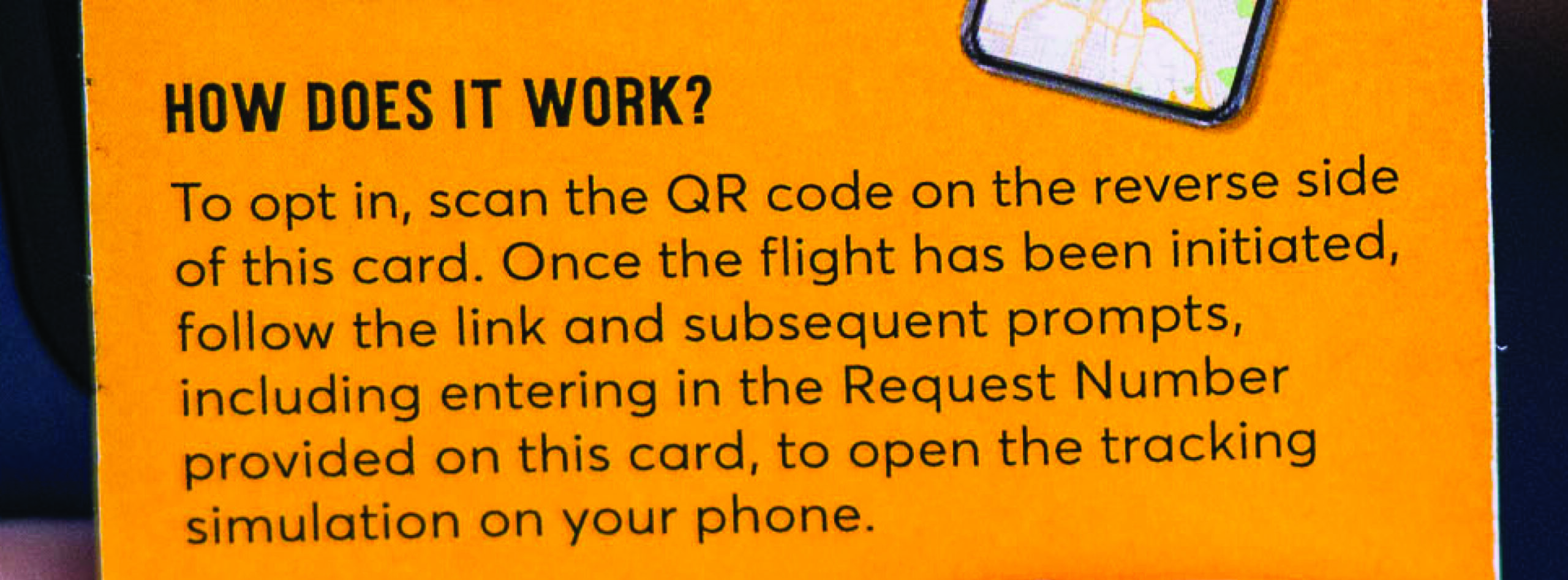
How Crews Provide the Link
At the start of the transport, PHI crews provide:
- a secure Family Trax link
- simple instructions
- assurance that the link updates live
The link works on any device — no app required.
What Families Can See
Through Family Trax, households can view:
- takeoff
- real-time flight movement
- the direction of travel
- progress toward the hospital
- arrival at the receiving facility¹
The link expires shortly after arrival to protect privacy².
Why It Matters
Family Trax helps families:
- avoid uncertainty
- stay oriented during fast events
- travel confidently to the right hospital
- coordinate with relatives
- feel connected to the patient and the process
In moments of stress, having clear, accurate information matters.
How PHI Cares Membership Supports Families
PHI Cares Membership provides significant financial protection by covering out-of-pocket costs for medically necessary transports performed by PHI Air Medical². During an emergency, families are juggling communication, logistics, and emotional stress. Membership simplifies the financial side so households can focus on their loved one.
Membership protection applies regardless of:
- which hospital the aircraft ultimately uses
- how the flight path adjusts
- weather-related approach changes
- timing differences during transport
Combined with Family Trax, PHI Cares Membership provides both clarity and financial stability during a critical time.
How Families Stay Connected During Challenging Moments
PHI Air Medical understands that air medical transports move quickly and can create uncertainty for families. Family Trax brings clarity by showing where the aircraft is and where the patient will arrive. PHI Cares Membership brings stability by protecting families from out-of-pocket costs for medically necessary transports.
Together, they help households stay connected, confident, and supported — even in difficult circumstances.
Frequently Asked Questions
Why does the aircraft sometimes change direction on Family Trax?
Weather and landing adjustments are normal parts of aviation³.
Does a direction change mean something is wrong?
No. These movements reflect routine aviation practice and safety, not necessarily patient condition.
How do families receive the Family Trax link?
PHI crews provide the secure link at the start of the transport. It works on any desktop or mobile device¹.
Does PHI Cares Membership apply if the hospital changes?
Yes. Membership applies to all medically necessary PHI Air Medical transports².
Sources
¹ PHI Air Medical. Family Trax Overview. https://www.phiairmedical.com/family-trax-2/
² PHI Cares. Family Trax and Membership Overview. https://phicares.com/2024/04/02/familytrax-and-phi-cares-your-support-services-from-phi-air-medical/
³ Martin TE. Practical aspects of aeromedical transport. Critical Care. 2003. https://www.ncbi.nlm.nih.gov/pmc/articles/PMC270667/